Every mine, no matter how large or profitable, eventually stops producing — and what happens to the site afterward is one of the most heavily regulated, financially significant, and easily overlooked aspects of the entire mining lifecycle. Reclamation and closure planning, backed by mandatory financial assurance, exists specifically to make sure a mine’s environmental legacy doesn’t become a permanent, unfunded liability for governments and local communities. Here is how the process works and why it matters to investors.
The Short Answer
Mine reclamation and closure planning is the process of restoring a mined site to a safe, stable, and environmentally appropriate condition after mining operations end. Mining companies are typically required to post financial assurance — commonly called a reclamation bond — before operations begin, guaranteeing that funds exist to cover this work even if the company later becomes insolvent.
What Reclamation Actually Involves
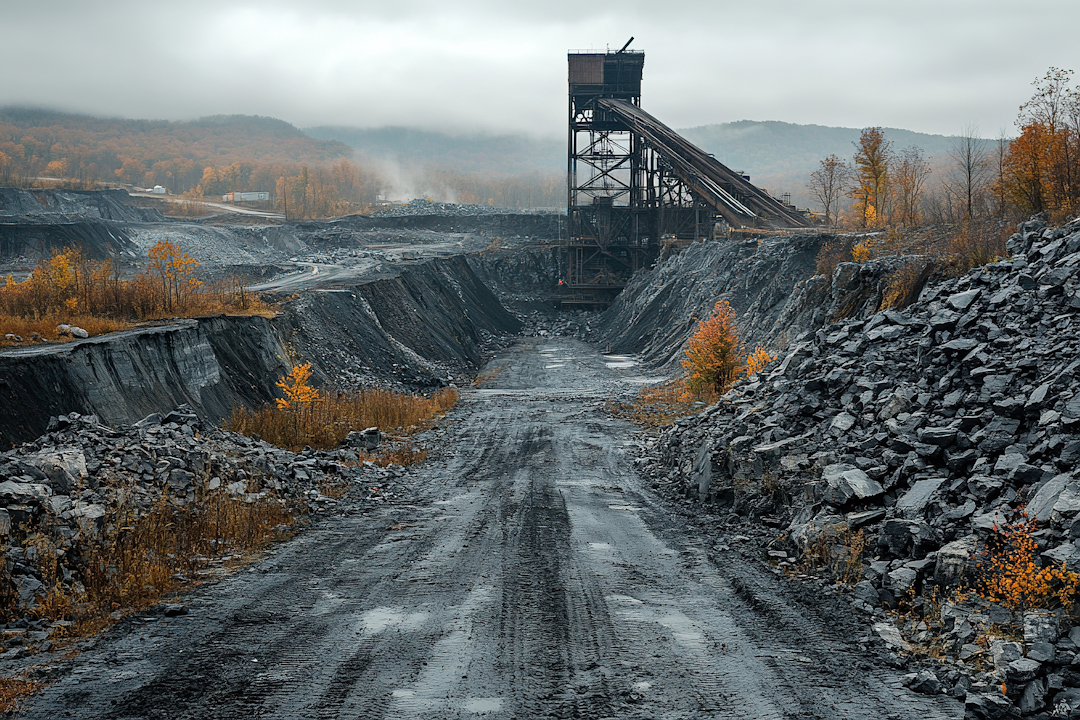
Broadly interpreted, mine closure requires leaving behind viable ecosystems on the mined land that are compatible with a healthy environment and human activities, present low hazard, and include measures to prevent ongoing pollution long into the future. In practice, this typically includes recontouring and stabilizing waste rock dumps and tailings storage facilities, covering and revegetating disturbed land, managing water quality both during and after closure, removing or safely decommissioning infrastructure and equipment, and, for sites with acid-generating waste rock, implementing measures specifically designed to prevent acid mine drainage — the process by which sulfide minerals exposed to air and water generate acidic runoff capable of severely damaging nearby waterways for decades if left unmanaged.
Why Financial Assurance Exists
The core problem financial assurance is designed to solve is straightforward but historically significant: without a guaranteed funding mechanism in place before a mine begins operating, there is a real risk that a company could become insolvent, be acquired and dissolved, or simply walk away before completing its reclamation obligations — leaving the cleanup cost, and often the environmental damage itself, to fall on governments and taxpayers instead. Academic research on the topic, cited by ResearchGate, has found that when bankruptcy is a live possibility and no bond is required, mining firms have a measurable financial incentive to produce more waste than is socially optimal, since the cleanup liability effectively falls on the government rather than the company itself. A properly sized bond corrects this incentive by ensuring the firm bears the full cost of its own environmental impact regardless of what happens to the company later.
How Financial Assurance Is Typically Structured
Reclamation bonding and financial assurance are terms generally used interchangeably in the industry. Common financial assurance instruments include surety bonds — issued by specialized insurance-like providers who guarantee payment if the mining company defaults on its obligations — cash deposits, letters of credit, and, more controversially, self-bonding, where a company guarantees reclamation costs based on its own overall corporate financial strength rather than a third-party instrument.
Self-bonding has faced significant regulatory scrutiny following the bankruptcy of several large coal mining companies that had relied on self-bonds, at least in part, to meet their financial assurance requirements — cases that raised serious policy questions, examined in a 2016 US Government Accountability Office review, about whether self-bonding provides adequate real-world protection compared to third-party surety instruments.
How Bond Amounts Are Calculated
Reclamation bond requirements, whether administered by the US BLM, the Office of Surface Mining Reclamation and Enforcement (OSMRE) for coal specifically under the Surface Mining Control and Reclamation Act (SMCRA), or provincial and state agencies, are generally required to be sufficient to cover the full estimated cost of completing reclamation if the regulatory agency itself had to hire a third party to complete the work — not merely a token amount, but a figure genuinely intended to fund complete restoration under a worst-case scenario. Bond requirements are also typically required to be reviewed and updated periodically — at minimum, every five years according to responsible mining industry frameworks — or whenever a significant change occurs to the mine plan that affects the scope of eventual reclamation obligations.
Notably, tailings storage facility bonds can represent some of the largest individual bond requirements a mining operator faces, particularly for older operations with significant historical tailings footprints, according to Evergreen Surety — reflecting the outsized long-term environmental risk tailings facilities represent relative to other components of a mine site.
A Long-Term, Noncancellable Obligation
Reclamation bonds are structured as long-term, often noncancellable financial obligations that can span decades — reflecting the reality that a mine’s operational life, closure process, and post-closure monitoring period together can extend well beyond 20 years in many cases. This long time horizon is precisely why many surety carriers are selective about which mining bond risks they are willing to underwrite, and why specialized mining bonding brokers with established relationships across the surety market have become an important part of how mining companies structure and maintain adequate financial assurance over a project’s full lifecycle.
Why This Matters for Investors
Reclamation bonding requirements represent a genuine, material financial obligation for any mining company, and the size of that obligation typically scales with the environmental footprint and complexity of a project — meaning it should be factored into any assessment of a company’s overall capital requirements and balance sheet health, alongside the operating costs (as covered in our AISC explainer) and capital expenditure figures more commonly discussed in mining stock analysis. A company with inadequately sized or poorly structured financial assurance carries real regulatory and reputational risk that can surface unexpectedly, particularly during periods of financial stress.
Key Takeaways for Investors
- Mine reclamation and closure planning restores a mined site to a safe, stable, environmentally appropriate condition after operations end
- Financial assurance (reclamation bonds) is typically required before mining begins, ensuring funds exist for cleanup even if the company later becomes insolvent
- Common instruments include surety bonds, cash deposits, letters of credit, and self-bonding — the latter has faced scrutiny following coal industry bankruptcies
- Bond amounts must generally cover the full cost of a regulatory agency completing reclamation itself, and are reviewed periodically, typically every five years
- Tailings storage facility bonds can represent some of the largest individual bond requirements a mining operator faces
- Reclamation bonding is a genuine, material financial obligation that should be factored into any assessment of a mining company’s capital requirements and balance sheet strength
SOURCES
1. GBR — Mine Reclamation Bonds: https://www.gbreports.com/contents/mine-reclamation-bonds/
2. US GAO — Financial Assurances for Reclamation: Federal Regulations and Policies: https://www.gao.gov/products/gao-17-207r
3. Evergreen Surety — Mining Surety Bonds: Reclamation, Permit & Closure Bonds: https://evergreensurety.com/energy-commodities-surety-bonds/mining/
4. ResearchGate — Mine Reclamation Bonding and Environmental Insurance: https://www.researchgate.net/publication/247831734_Mine_reclamation_bonding_and_environmental_insurance
DISCLAIMER
This article is an educational explainer based on publicly available industry data, market research, and published analyst commentary. Information was current as of the publication date noted below. Commodity price data and forecasts are sourced as cited and reflect market conditions at the time of writing.
Mining Markets Report has not received compensation from any company, institution, or organization in connection with this article.
Institutional price forecasts and analyst commentary referenced in this article represent third-party opinions at the time of publication and are not guarantees of future commodity performance.
The information provided is for informational and educational purposes only and does not constitute financial, investment, or professional advice. Readers are encouraged to conduct their own due diligence and consult a qualified financial advisor before making any investment decision.
For full terms, see our Disclaimer.