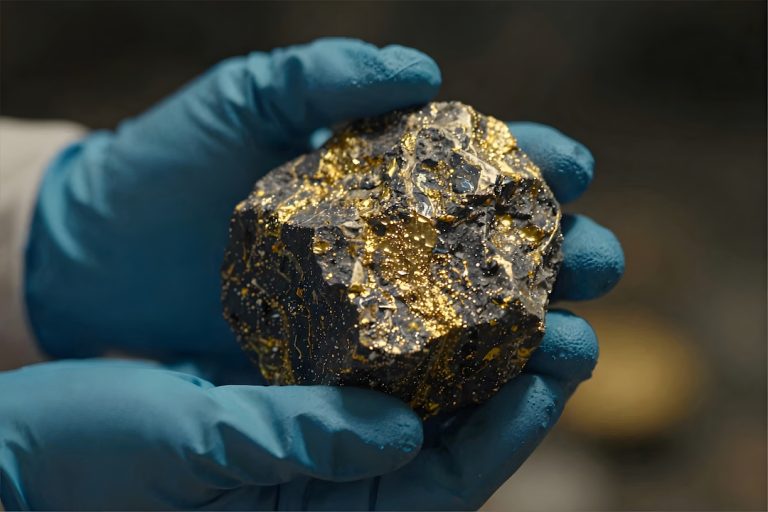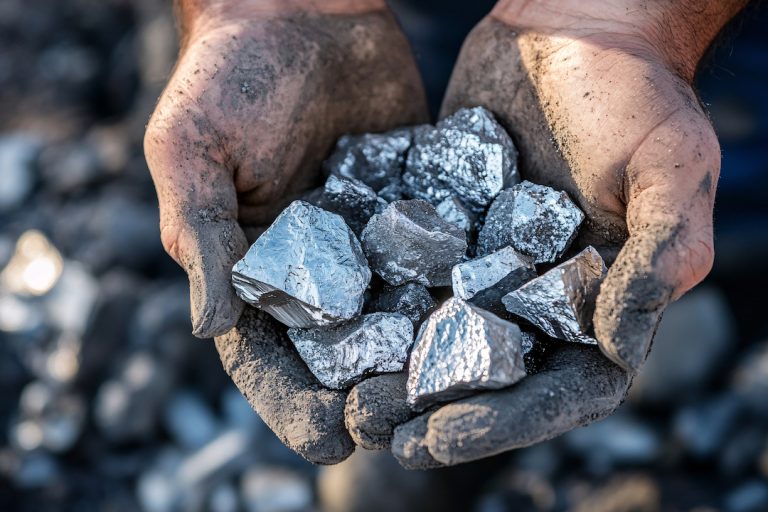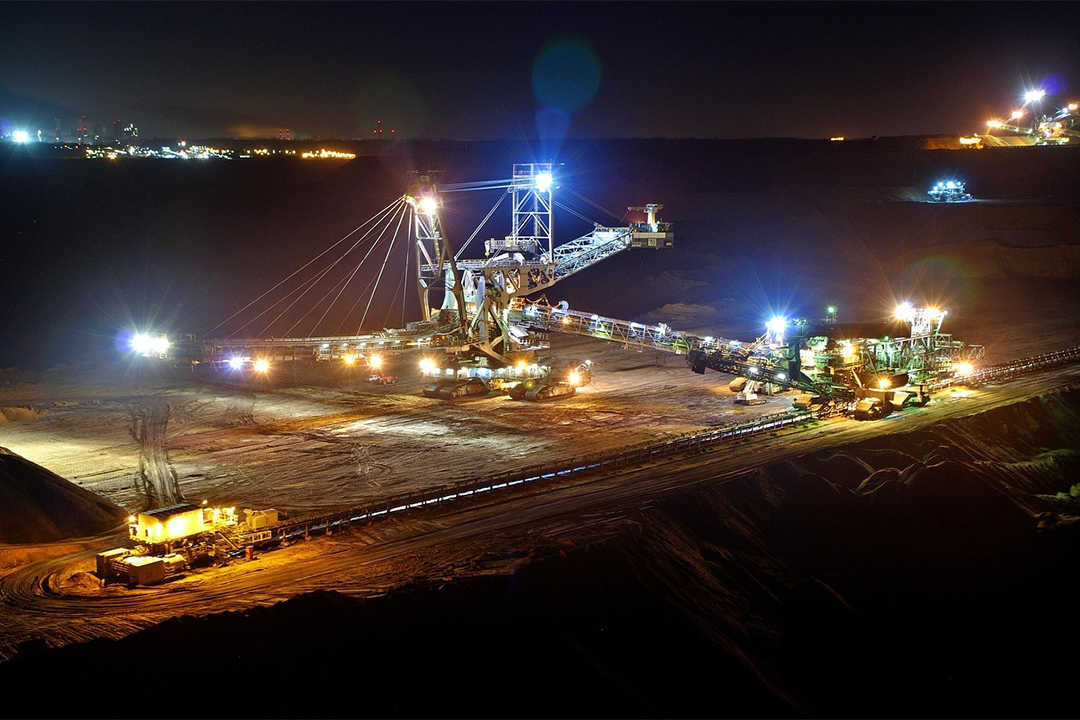
Nevada is the most important mining state in the United States and one of the most significant mining jurisdictions in the world. The Silver State — its nickname refers to historic silver discoveries, though it is gold that drives the modern industry — is the number one gold-producing state in the US and regularly ranks among the top jurisdictions globally for mining investment attractiveness.
For investors tracking US-listed mining companies, or Canadian and Australian companies with Nevada projects, understanding how the state’s regulatory framework works is essential. Nevada has developed a permitting model that the mining industry widely regards as more efficient and predictable than most US jurisdictions — and that has been recommended by industry bodies as a model for national adoption.
Nevada’s Mining Significance
Nevada has produced more than 217 million ounces of gold since 1989, making it the fourth largest gold-producing jurisdiction in the world and by far the largest in the United States. The state holds more than 275,000 active mining claims — approximately 49% of the Bureau of Land Management’s total active claims nationally.
The centerpiece of Nevada’s gold industry is the Carlin Trend — a 40-mile mineralized belt in northeastern Nevada that hosts several of the world’s largest and lowest-cost gold mines, operated by Barrick Gold (NYSE: GOLD), Nevada Gold Mines (a Barrick and Newmont joint venture), and others. Beyond gold, Nevada is a major producer of silver, copper, lithium, barite, and gypsum, and is increasingly significant for lithium as the state hosts some of the world’s largest known lithium deposits.
The Fraser Institute’s Annual Survey of Mining Companies — the mining industry’s most respected assessment of global investment attractiveness — has ranked Nevada in its top five jurisdictions for investment attractiveness in virtually every year since the survey began in 1997, and as the number one jurisdiction in multiple years.
Who Regulates Mining in Nevada?
Nevada mining is regulated at both the federal and state level. Most mining in Nevada occurs on federal public land administered by the BLM, making federal regulation the primary framework:
- Bureau of Land Management (BLM) Nevada State Office — administers federal mining claims, reviews and approves Notices of Intent and Plans of Operations for mining on BLM-managed land, and manages reclamation bonding for federal lands. BLM Nevada has the largest mining program of any BLM state office in the country, with 198 authorized mining plans of operations and 282 active exploration notices as of recent data.
- US Forest Service — administers mining on national forest lands in Nevada, including portions of the Humboldt-Toiyabe National Forest, which covers significant areas of mining country in central and northern Nevada.
- Nevada Division of Environmental Protection (NDEP) — the primary state environmental regulator for mining. NDEP issues water pollution control permits, administers the state’s reclamation permit program, and coordinates with BLM and the Forest Service on reclamation bonding. NDEP also oversees air quality permits for mining operations.
- Nevada Division of Minerals — administers Nevada’s dissolved mineral resources (including lithium brine) regulations and maintains records of mining activity in the state.
- Nevada State Engineer — regulates water rights in Nevada, which is critically important in an arid state where water is a scarce and heavily regulated resource. Mining operations that require significant water use must obtain water rights from the State Engineer.
The Nevada Permitting Model: Why It Works Better
Nevada’s regulatory efficiency is not accidental — it is the product of deliberate institutional design and long operational experience with high volumes of mining permit applications.
BLM Nevada has a memorandum of understanding with the US Forest Service and NDEP to co-manage the reclamation bonding program, enabling coordinated rather than sequential review of reclamation bond requirements. This coordination is one of the practical reasons Nevada’s timelines are faster than many other states.
BLM Nevada also has a stated goal of completing an Environmental Impact Statement (EIS) for proposed mining projects within one year of publishing the Notice of Intent — significantly faster than the national average.
According to data cited at the 2024 Select USA Summit by the Nevada Division of Minerals, 86% of mining companies surveyed expected to obtain their exploration permits in Nevada in fewer than 10 months, and 43% actually obtained them in fewer than two months. These figures reflect exploration permitting rather than full mine development permitting, but they illustrate the state’s relative efficiency.
The Federal Permitting Process in Nevada
For mining activity on BLM or Forest Service land in Nevada, the standard federal permitting pathway applies:
- Notice — for exploration activities disturbing less than five acres of surface on BLM land, a Notice is filed with 15 days advance notice. Non-discretionary — BLM cannot deny it but may attach conditions. A reclamation bond is required before activities begin.
- Plan of Operations (PoO) — required for mining activities beyond the Notice threshold. The PoO must be submitted to BLM, triggering a NEPA environmental review (EA or EIS). The company must also obtain an NDEP reclamation permit for state-managed aspects of the closure plan.
- NDEP Water Pollution Control Permit — required for any mining activity that could affect water quality. Must be obtained alongside the federal approvals.
- Air Quality Permit — from NDEP for dust, emissions, and other air quality impacts from mining and processing operations.
- Reclamation Bond — financial assurance required by both BLM and NDEP to ensure the mine site is properly rehabilitated after closure. For large Nevada mining projects, reclamation bonds can reach hundreds of millions or more. BLM Nevada, the Forest Service, and NDEP together hold over $3.9 billion in reclamation bonding for Nevada exploration and mining projects.
Lithium: Nevada’s Next Major Mining Chapter
Nevada’s growing importance in lithium — a critical mineral essential for electric vehicle batteries and grid storage — adds a new dimension to the state’s regulatory landscape. Lithium is a “locatable mineral” under the General Mining Act of 1872, meaning lithium mining on federal lands is governed by the same BLM claim and permitting framework as gold and copper.
For lithium brine deposits — where lithium is dissolved in subsurface brines rather than contained in hard rock — water rights add a critical additional regulatory dimension. Nevada law treats water as a state resource, and the State Engineer regulates quantity and beneficial use. Large-scale lithium brine extraction requires significant water rights from the State Engineer in addition to federal and state mining permits, and this has been one of the more complex regulatory challenges in permitting Nevada’s emerging lithium projects.
Key Takeaways for Investors
- Nevada is the US’s number one gold-producing state with 217+ million ounces produced since 1989, and consistently ranks in the top five jurisdictions globally for mining investment attractiveness
- Nevada has more than 275,000 active mining claims — 49% of the BLM’s national total
- Key regulators: BLM Nevada, NDEP, Nevada Division of Minerals, Nevada State Engineer (water rights)
- Nevada’s permitting model is widely regarded as the most efficient in the US — BLM Nevada targets EIS completion within one year of NOI publication
- 86% of companies expected exploration permits in Nevada in under 10 months; 43% received them in under two months
- Lithium is governed by the same 1872 Mining Law framework as gold and copper, but water rights add an additional complexity for brine deposits
- Reclamation bonding exceeds $3.9 billion — BLM, Forest Service, and NDEP jointly manage the reclamation program
SOURCES
1. BLM Nevada — Mining and Minerals: https://www.blm.gov/programs/energy-and-minerals/mining-and-minerals/about/nevada
2. Nevada Division of Minerals — Select USA 2024 Presentation: https://minerals.nv.gov/uploadedFiles/mineralsnvgov/content/home/features/RP/RP_NevadaIsMore-MineralsResourcesAndAllure_20240625_SelectUSA_Final_resize.pdf
3. SME White Paper on Exploration and Mine Permitting Timelines (April 2025): https://www.smenet.org/what-we-do/technical-briefings/white-paper-on-exploration
4. Fraser Institute Annual Survey of Mining Companies 2023: https://www.fraserinstitute.org/studies/annual-survey-of-mining-companies-2023
5. Essential Minerals Association — Land Use and Permitting: https://www.essentialminerals.org/policy/land-use-permitting/
6. Nevada Division of Environmental Protection (NDEP): https://ndep.nv.gov
DISCLAIMER
This article is an educational explainer based on publicly available regulatory documents, legal commentary, and published industry sources. Information was current as of May 2026. Laws and regulations change — readers should consult the relevant regulatory bodies for the most current requirements.
Mining Markets Report has not received compensation from any company, regulatory body, or organization in connection with this article.
The information provided is for informational and educational purposes only and does not constitute financial, investment, legal, or professional advice. Readers are encouraged to conduct their own due diligence and consult a qualified professional before making any investment decision.
For full terms, see our Disclaimer.