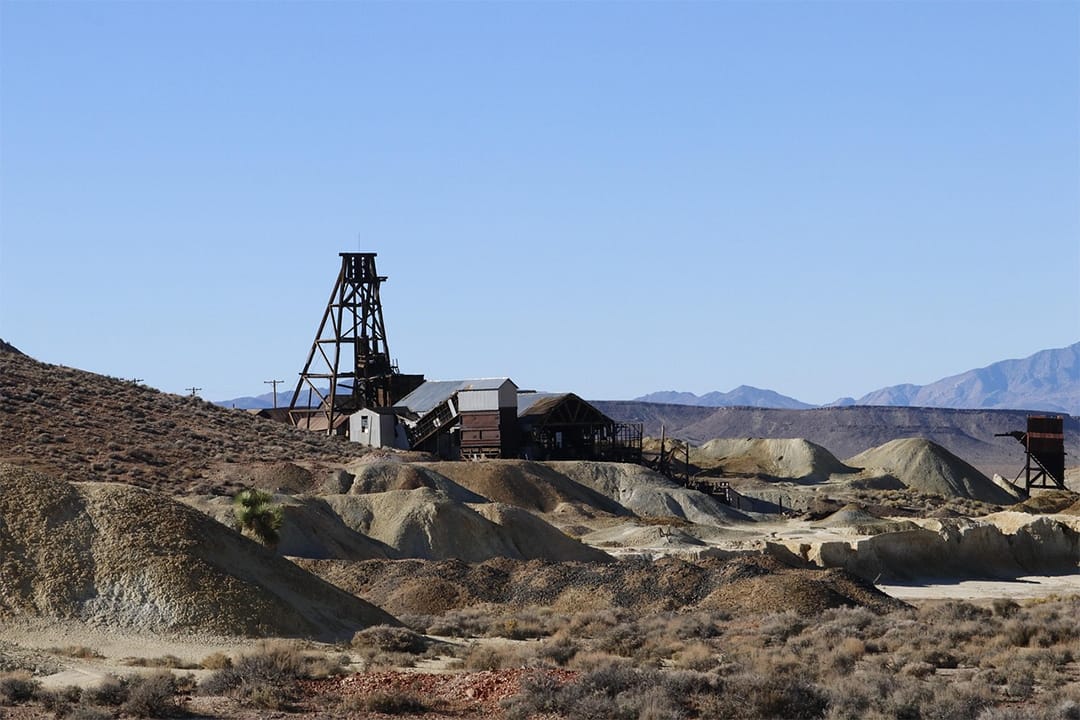
The United States holds vast reserves of gold, copper, lithium, uranium, and critical minerals — many of them on federal lands managed by agencies like the Bureau of Land Management (BLM) and the US Forest Service. But turning a mineral discovery into an operating mine in the US involves one of the most complex permitting frameworks in the world, one that has historically taken seven to ten or more years to navigate.
For investors tracking NYSE or NASDAQ-listed mining companies, or US-focused projects held by Canadian and Australian-listed companies, understanding the American permitting framework is essential context. This guide explains how the process works, which agencies are involved, and what recent policy changes under the Trump administration mean for the outlook.
The Foundation: The General Mining Law of 1872
Most hardrock mining on federal public lands in the United States is still governed by the General Mining Law of 1872 — a law signed by President Ulysses S. Grant that was originally designed to encourage settlement and economic development in the post-Civil War West. Under the 1872 law, any US citizen 18 or older has the right to stake a mining claim on federal public domain lands that are open to mineral entry, giving them the right to explore and extract valuable minerals.
There are two types of mining claims under the 1872 law: lode claims, which cover hard rock mineral veins, and placer claims, which cover alluvial gold and mineral-bearing gravel deposits. Claims are filed with the local county and registered with the BLM. Claim holders pay an annual maintenance fee — currently $165 per claim — to keep their claims active.
The 1872 law is notable for what it does not require: mining companies extracting gold, silver, copper, and other hardrock minerals from federal lands pay no royalty to the federal government. This distinguishes hardrock mining from oil, gas, and coal extraction, which are all subject to federal royalties. Reform efforts to impose a royalty — typically proposed at 4 to 8% — have been debated in Congress for decades but have not been enacted as of 2026.
Which Agencies Are Involved?
US mine permitting involves multiple federal agencies with overlapping and sometimes competing jurisdictions:
- Bureau of Land Management (BLM) — the primary federal land manager for hardrock mining on public domain lands outside national forests. The BLM administers the federal mining claim system, reviews and approves Plans of Operations for mining on BLM-managed land, and manages reclamation bonding.
- US Forest Service (USFS) — manages national forests, which cover significant portions of key mining states including Nevada, Montana, Idaho, and Alaska. Mining on Forest Service land requires a Plan of Operations approved by the local Forest Service district, separate from BLM authorization.
- Environmental Protection Agency (EPA) — administers the Clean Water Act (Section 404 for wetlands discharge permits, Section 402 for water quality), Clean Air Act permits, and Superfund (CERCLA) cleanup obligations. The EPA has authority to veto Clean Water Act Section 404 permits in certain circumstances.
- US Fish and Wildlife Service — administers the Endangered Species Act, which can significantly affect mine permitting if threatened or endangered species are present in the project area.
- Army Corps of Engineers — issues Section 404 Clean Water Act permits for activities involving dredge or fill of US waters, including wetlands disturbance.
- State agencies — every state has its own mining regulatory framework. State permits typically include reclamation permits, water quality permits, air quality permits, and sometimes separate state environmental reviews.
The Plan of Operations — The Core Federal Permit
For any mining activity on BLM or Forest Service land that goes beyond casual exploration — defined as disturbance of more than five acres of surface — a formal mining Plan of Operations (PoO) must be submitted and approved before work can begin. The PoO describes in detail the proposed mining methods, infrastructure, equipment, the size and footprint of operations, and the environmental mitigation measures the company will implement.
For smaller-scale exploration activities disturbing less than five acres on BLM land, a Notice — rather than a full Plan of Operations — is required. A Notice only requires 15 days advance notice to the BLM and is non-discretionary, meaning the BLM cannot deny it but can attach conditions. This makes the Notice pathway significantly faster for exploration drilling programs.
NEPA: The Environmental Review Process
Once a Plan of Operations is submitted, the relevant federal agency — BLM or the Forest Service — is required to conduct an environmental review under the National Environmental Policy Act (NEPA). NEPA requires federal agencies to assess the environmental impacts of proposed actions before approving them.
There are two main levels of NEPA review:
- Environmental Assessment (EA) — a shorter review for projects with potentially significant but manageable impacts. Typically takes several months to one year to complete in Nevada, according to BLM data.
- Environmental Impact Statement (EIS) — required for major projects with potentially significant environmental impacts. More comprehensive, requires a public scoping process, alternatives analysis, and formal public comment periods. BLM Nevada has a goal of completing an EIS within one year of publishing the Notice of Intent, though complex projects often take longer. Nationally, EIS preparation has taken an average of several years in recent administrations.
NEPA litigation — legal challenges to the adequacy of environmental reviews filed by environmental groups or other parties — has been cited by industry as one of the most significant sources of permitting delay in the US. A single NEPA challenge can add years to a project’s timeline.
Other Federal Permits Required
In addition to the Plan of Operations and NEPA review, major US mining projects typically require multiple additional federal and state permits:
- Clean Water Act Section 404 permit from the Army Corps of Engineers (for wetland impacts)
- Clean Water Act Section 402 (NPDES) permit for water discharge
- Endangered Species Act consultation with the US Fish and Wildlife Service if listed species are present
- National Historic Preservation Act Section 106 consultation if cultural resources may be affected
- State reclamation permit requiring a reclamation bond — financial assurance that the mine site will be properly rehabilitated after closure
- State water rights permit (particularly important in arid Western states where water is scarce and regulated by the State Engineer)
- State air quality operating permits
The Current Policy Environment: Trump Administration and Critical Minerals
The Trump administration’s March 2025 Executive Order — Immediate Measures to Increase American Mineral Production — directed all federal agencies to prioritize and expedite permitting for domestic mineral projects, particularly critical minerals. This has translated into expanded use of the FAST-41 permitting program, with more than 35 mining projects added to the Federal Permitting Dashboard since the executive order was signed.
The administration has framed domestic mine permitting reform as a national security issue, citing US dependence on foreign — particularly Chinese — supply chains for critical minerals essential to defense, energy, and advanced manufacturing. Mining Markets Report covers the FAST-41 program in a separate explainer.
How Long Does US Mine Permitting Take?
Historically, the full permitting process for a new major mine in the US has taken seven to ten years or more from initial Plan of Operations submission to final permit approval. Simple projects on BLM land in favorable jurisdictions like Nevada have sometimes been permitted in two to three years. Complex projects in environmentally sensitive areas, on Forest Service land, or in states with more extensive review requirements can take significantly longer.
Nevada stands out as one of the fastest permitting jurisdictions in the US. According to data cited at the 2025 Select USA Summit, 86% of mining companies expected to get exploration permits in Nevada in fewer than 10 months, and 43% actually obtained them in fewer than two months.
Key Takeaways for Investors
- US hardrock mining on federal lands is governed by the General Mining Law of 1872 and administered primarily by BLM and the Forest Service
- A Plan of Operations is the core federal mining permit for activities beyond casual exploration — requires NEPA review
- Multiple federal agencies have jurisdiction: BLM, Forest Service, EPA, Army Corps, Fish and Wildlife Service
- NEPA environmental review — EA or EIS — is a central part of the process and a major source of timeline risk
- State permits are also required in addition to federal approvals — Nevada, Alaska, and other states have their own regulatory frameworks
- The Trump administration’s March 2025 executive order on critical minerals has accelerated the permitting agenda and expanded FAST-41 coverage to mining projects
- Nevada is widely regarded as the fastest and most mining-friendly permitting jurisdiction in the US
SOURCES
1. ICLG — Mining Laws and Regulations USA 2026: https://iclg.com/practice-areas/mining-laws-and-regulations/usa
2. BLM Nevada — Mining and Minerals: https://www.blm.gov/programs/energy-and-minerals/mining-and-minerals/about/nevada
3. SME White Paper on Exploration and Mine Permitting Timelines (April 2025): https://www.smenet.org/what-we-do/technical-briefings/white-paper-on-exploration
4. National Law Review — Understanding Mining Permit Reform: https://natlawreview.com/article/permitting-reform-united-states
5. Federal Permitting Improvement Steering Council — FAST-41 Program: https://www.permitting.gov/projects/title-41-fixing-americas-surface-transportation-act-fast-41
6. US EPA — Mining Exploration to Permitting to Reclamation Presentation 2024: https://www.epa.gov/system/files/documents/2024-05/2024-05-r9-rtoc-presentation-mining-exploration-permitting-reclamation.pdf
7. General Mining Law of 1872 — Ballotpedia: https://ballotpedia.org/General_Mining_Law_of_1872
DISCLAIMER
This article is an educational explainer based on publicly available regulatory documents, legal commentary, and published industry sources. Information was current as of May 2026. Laws and regulations change — readers should consult the relevant regulatory bodies for the most current requirements.
Mining Markets Report has not received compensation from any company, regulatory body, or organization in connection with this article.
The information provided is for informational and educational purposes only and does not constitute financial, investment, legal, or professional advice. Readers are encouraged to conduct their own due diligence and consult a qualified professional before making any investment decision.
For full terms, see our Disclaimer.