Nickel occupies an unusual position among industrial metals: it is simultaneously an old-economy commodity essential to stainless steel — a market that has existed for over a century — and a new-economy battery metal central to the electric vehicle transition. That dual identity, combined with the extraordinary rise of a single country, Indonesia, to dominate global supply, makes nickel one of the more complex commodities for investors to understand. Here is what nickel is actually used for, and how the market has been reshaped over the past several years.
The Short Answer
Nickel’s largest use by far is stainless steel manufacturing, which consumes roughly 65-70% of global production. Its second major use is in certain electric vehicle battery chemistries. Indonesia now dominates global mine supply, and a rapid Indonesian-driven policy shift has fundamentally reshaped nickel pricing and availability.
Nickel’s Primary Use: Stainless Steel
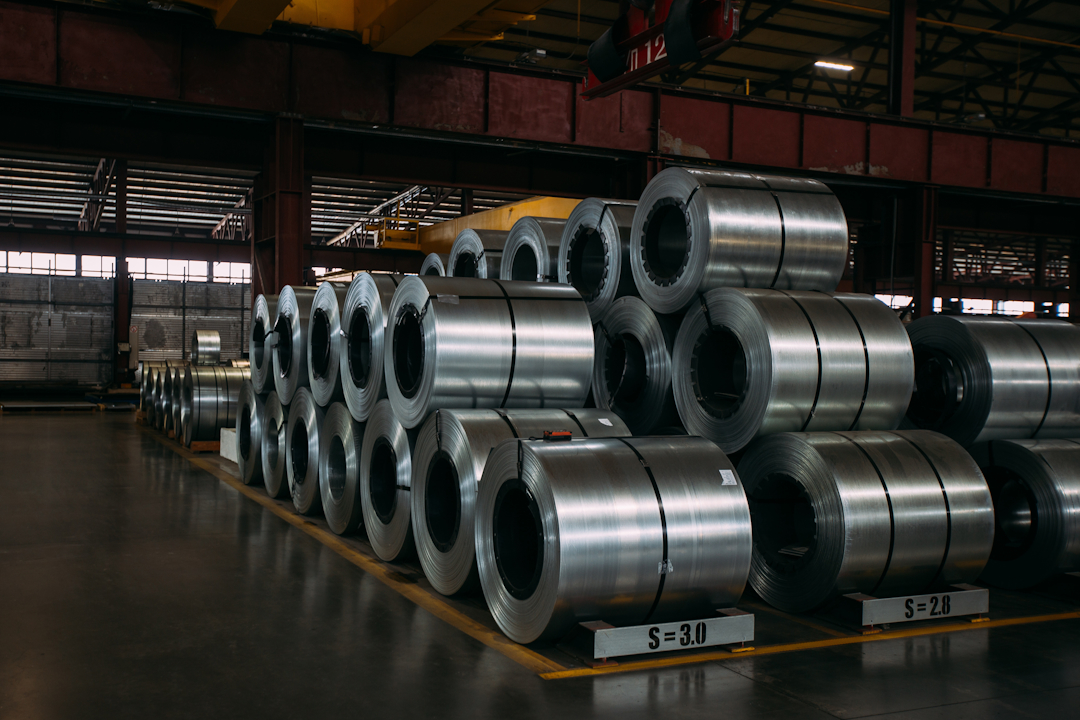
The overwhelming majority of the world’s nickel goes into stainless steel, where it is alloyed with chromium and iron to prevent corrosion and add strength — the reason stainless steel is used in everything from kitchen appliances and industrial equipment to construction and transportation infrastructure. This has been nickel’s dominant end-use for decades and remains so today, even as battery demand has grown rapidly in absolute terms.
Nickel’s Growing Role in EV Batteries
Nickel is also a key input in certain lithium-ion battery chemistries — specifically nickel-cobalt-manganese (NCM) and nickel-cobalt-aluminum (NCA) cathodes, which offer higher energy density than alternative chemistries, translating into longer EV driving range for a given battery size. However, EV batteries require a much higher purity of nickel — known as Class 1 nickel, refined to 99.8% purity or higher as nickel sulfate — than the Class 2 nickel (nickel pig iron or ferronickel) traditionally used for stainless steel.
The LFP Challenge: Why Nickel’s Battery Story Is More Complicated Than It Looks
A critical nuance for investors: nickel-based EV batteries are facing intensifying competition from an alternative chemistry called LFP (Lithium Iron Phosphate), which contains no nickel at all. LFP batteries are cheaper — on average more than 40% less expensive than nickel-based alternatives — and China’s ability to mass-produce them cheaply has driven their global market share from less than 10% of the EV battery market in 2020 to roughly half of the global EV battery market by 2025, according to figures cited by the Jakarta Post.
Bloomberg projects nickel-based batteries’ share of the global EV battery market could fall below 40% going forward. This represents a genuine structural headwind for the nickel bull case tied specifically to EVs, even as broader electrification and stainless steel demand remain robust.
Indonesia’s Extraordinary Rise to Dominance
No single country shift has reshaped a major metals market as dramatically as Indonesia’s rise in nickel. Indonesia now accounts for roughly 55% or more of global mine production, a position built through a deliberate industrial policy: a 2020 export ban on raw, unprocessed nickel ore that forced foreign investment — much of it Chinese — into building domestic smelting and processing capacity within Indonesia rather than shipping raw ore abroad for processing.
This strategy proved remarkably successful in industrial terms. By 2025, Indonesia had 49 Rotary Kiln Electric Furnace (RKEF) smelters operating domestically, transforming the country from a raw ore exporter into a vertically integrated nickel processing hub covering nickel pig iron, ferronickel, nickel matte, stainless steel, and — increasingly — battery-grade materials through High-Pressure Acid Leaching (HPAL) technology.
The Green Nickel Gap
Despite marketing itself as a green, EV-driven nickel powerhouse, Indonesia’s own 2025 production was overwhelmingly absorbed by stainless steel — approximately 83% — with only about 17% flowing into the EV battery supply chain, according to the Centre for Research on Energy and Clean Air. This reveals a significant gap between Indonesia’s strategic narrative and the market’s actual demand composition.
Indonesia’s 2026 Supply Tightening
In a significant policy shift, the Indonesian government sharply reduced its 2026 nickel ore production quota (known as RKAB) to 250-260 million wet metric tonnes, down roughly 34% from 379 million wet metric tonnes approved for 2025, according to Carbon Credits. The stated goals are aligning ore output with domestic smelter capacity, curbing oversupply, and supporting prices — following the same OPEC-style playbook the Democratic Republic of Congo used for cobalt. Following the announcement, LME nickel prices surged past $18,000 per tonne before stabilizing around $17,200 per tonne in early 2026.
Delays in RKAB quota approvals have already halted operations at some mines, including PT Vale Indonesia, illustrating the enforcement risk built into the new policy. Despite the production cuts, a global surplus of 261,000 to 288,000 tonnes is still forecast for 2026, according to Carbon Credits, reflecting how large the prior oversupply had become and how much stainless steel demand growth has slowed.
China’s Downstream Dominance
Even as Indonesia dominates mining and initial processing, China remains the largest single consumer of nickel, accounting for approximately 63.5% of global nickel demand in 2025, and continues to dominate downstream battery and stainless steel manufacturing that ultimately determines where refined nickel products end up.
Key Takeaways for Investors
- Nickel’s primary use remains stainless steel, consuming roughly 65-70% of global production; EV batteries are the fast-growing secondary use
- EV battery-grade nickel requires much higher purity (Class 1, 99.8%+) than stainless-steel-grade nickel (Class 2)
- LFP batteries — which use no nickel — have grown from under 10% to roughly half the global EV battery market since 2020, a genuine headwind for nickel’s EV demand story
- Indonesia now supplies roughly 55%+ of global mined nickel, built through a 2020 export ban that forced domestic smelter investment
- Despite green nickel marketing, 83% of Indonesia’s 2025 output went to stainless steel, only 17% to EV batteries
- Indonesia cut its 2026 nickel ore production quota by roughly 34% to support prices, following a similar playbook to the DRC’s cobalt strategy
- China dominates nickel demand and downstream processing even though it does not dominate mining
SOURCES
1. Carbon Credits — The Ultimate Guide to Nickel: Supply, Demand, and Prices for 2026: https://carboncredits.com/the-ultimate-guide-to-nickel-supply-demand-and-nickel-prices-for-2026-and-beyond/
2. CREA — Indonesia’s Nickel: Aimed at EVs, But Still Parked in Stainless Steel: https://energyandcleanair.org/publication/indonesias-nickel-aimed-at-evs-but-still-parked-in-stainless-steel/
3. The Jakarta Post — Indonesia’s Nickel at a Crossroads in the EV Battery Race: https://www.thejakartapost.com/business/2026/03/10/indonesias-nickel-at-a-crossroads-in-the-ev-battery-race
4. Asia News Network — Indonesia’s Nickel at a Crossroads in the EV Battery Race: https://asianews.network/indonesias-nickel-at-a-crossroads-in-the-ev-battery-race/
5. CSIS — Indonesia’s Nickel Industrial Strategy: https://www.csis.org/analysis/indonesias-nickel-industrial-strategy
DISCLAIMER
This article is an educational explainer based on publicly available industry data, market research, and published analyst commentary. Information was current as of the publication date noted below. Commodity price data and forecasts are sourced as cited and reflect market conditions at the time of writing.
Mining Markets Report has not received compensation from any company, institution, or organization in connection with this article.
Institutional price forecasts and analyst commentary referenced in this article represent third-party opinions at the time of publication and are not guarantees of future commodity performance.
The information provided is for informational and educational purposes only and does not constitute financial, investment, or professional advice. Readers are encouraged to conduct their own due diligence and consult a qualified financial advisor before making any investment decision.
For full terms, see our Disclaimer.