Cobalt is one of the most geographically concentrated commodities in the entire mining sector — a single country, the Democratic Republic of Congo, produces more than 70% of the world’s supply, giving Kinshasa a degree of market power over cobalt comparable to what OPEC has historically held over oil. Recent DRC policy decisions have sent cobalt prices soaring and reshaped how battery manufacturers think about supply security. Here is what cobalt is used for and why its supply chain is so uniquely concentrated.
The Short Answer
Cobalt is a key material in lithium-ion battery cathodes, particularly in high-energy-density EV battery chemistries, and also has applications in aerospace, medical devices, and magnets. The Democratic Republic of Congo produces more than 70% of global supply, and Chinese companies control the majority of DRC cobalt mining operations and dominate downstream refining.
What Cobalt Is Actually Used For
Cobalt’s primary modern use is in the cathodes of lithium-ion batteries, particularly nickel-cobalt-manganese (NCM) and nickel-cobalt-aluminum (NCA) chemistries widely used in electric vehicles. The amount of cobalt in a battery cathode directly affects the battery’s energy density — meaning cobalt content is closely tied to how much driving range an EV battery of a given size can deliver. Cobalt-containing batteries accounted for approximately 57% of total cobalt consumption in 2021, according to Chemistry World, with battery demand having grown substantially since. Global cobalt demand is expected to roughly quadruple over the coming decades, driven overwhelmingly by its role in lithium-ion batteries.
Cobalt is also designated a critical mineral by governments worldwide due to additional applications in electronics, medical devices, aerospace components, magnets, and military applications — uses that, while smaller in volume than batteries, are considered strategically essential and difficult to substitute.
The DRC’s Extraordinary Dominance
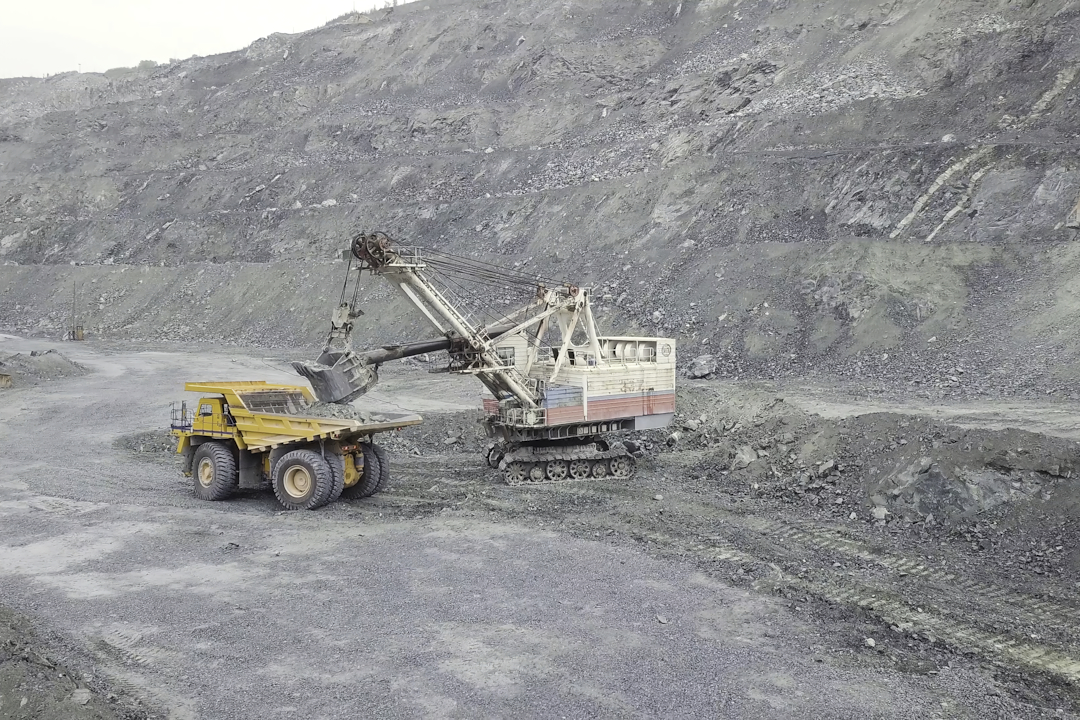
The Democratic Republic of Congo produces more than 70% of the world’s cobalt — a concentration level that exceeds even China’s dominance of most rare earth elements. This geological concentration exists because the DRC’s copper-cobalt belt, spanning the southeastern provinces of the country, hosts some of the richest cobalt deposits on Earth, typically as a byproduct of copper and nickel mining rather than being mined as a primary target on its own.
The 2025 Export Ban That Shook the Market
In February 2025, the DRC’s Authority for Regulation and Control of Strategic Mineral Substance Markets imposed a complete export ban on cobalt products — effectively cutting off global access to three-quarters of the world’s supply overnight. The move followed a collapse in cobalt prices, which had fallen below $10 per pound by early 2025, the lowest level since 2015, threatening government revenues from the sector.
Cobalt prices surged from approximately $20,000 per tonne in February 2025 to over $56,000 per tonne by January 2026, according to the Lobito Corridor Intelligence Unit — a price move of nearly 3x in less than a year, driven almost entirely by the DRC’s supply restriction rather than any underlying change in demand.
From Ban to Quota System
On October 16, 2025, the DRC lifted the total export ban and replaced it with a production quota system, allocating 96,600 tonnes of cobalt production annually for the 2026-2027 period. This represents a dramatic reduction from the roughly 200,000 to 220,000+ tonnes the DRC actually mined in 2024 — meaning the new quota framework cuts authorized output by nearly half even with the formal ban lifted.
According to Fastmarkets, this policy shift has flipped the global cobalt market from oversupply in early 2025 to a projected deficit for 2026, as the sustained supply restriction outpaces any near-term demand slowdown.
China’s Role: Mining Investment and Downstream Control
Chinese mining companies now control the majority of DRC cobalt production capacity. According to the Lobito Corridor Intelligence Unit, CMOC’s 2025 output of 117,549 tonnes alone exceeded the DRC’s entire authorized 2026-2027 export quota, and Zijin Mining holds a 39.6% stake in the massive Kamoa-Kakula copper-cobalt complex. Beyond mining, China controls nearly 80% of global cobalt refining capacity, according to Chemistry World — meaning that even cobalt mined by non-Chinese companies typically still flows through Chinese-controlled processing facilities before reaching battery manufacturers.
The Ethical Sourcing Challenge
Beyond pure supply concentration, cobalt sourcing from the DRC carries well-documented reputational risk tied to artisanal and small-scale mining (ASM) practices, including documented instances of child labor. A 2019 US lawsuit accused several major automotive and technology companies of aiding and abetting the exploitation of child miners in DRC cobalt supply chains. According to World Bank analysis, this has created sustained pressure on large-scale mining companies, traders, and processors to certify “ASM-free” cobalt, and has pushed many downstream battery and automotive companies to accelerate research into cobalt-free or cobalt-reduced battery chemistries specifically to reduce this exposure — a parallel dynamic to nickel’s LFP battery challenge, covered in our nickel explainer.
Key Takeaways for Investors
- Cobalt’s primary use is lithium-ion EV battery cathodes, where it improves energy density; it also has aerospace, medical, magnet, and defense applications
- The DRC produces more than 70% of global cobalt — one of the most extreme single-country supply concentrations of any mined commodity
- A February 2025 DRC export ban, replaced by a production quota system in October 2025, nearly tripled cobalt prices within a year
- The new 2026-2027 quota of 96,600 tonnes represents roughly half of 2024’s actual DRC production, and has flipped the market into a projected deficit
- Chinese companies control the majority of DRC cobalt mining and nearly 80% of global refining capacity
- Ethical sourcing concerns tied to artisanal mining and child labor have accelerated industry efforts toward cobalt-free battery chemistries
SOURCES
1. Fastmarkets — Dried-up Feedstock Pipeline Sends Cobalt Prices Soaring in 2025: https://www.fastmarkets.com/insights/dried-up-feedstock-pipeline-cobalt-prices-soaring-2025-deficit/
2. Lobito Corridor Intelligence Unit — DRC Cobalt Export Quotas: https://www.lobitocorridor.com/articles/drc-cobalt-export-quotas-battery-supply-chain/
3. Discovery Alert — Congo’s Cobalt Export Quotas Reshape Global Battery Supply: https://discoveryalert.com.au/drc-cobalt-export-regulations-2025-battery-supply-chain/
4. Chemistry World — Congo’s Cobalt Conundrum: https://www.chemistryworld.com/news/congos-cobalt-conundrum/4021696.article
5. World Bank — Cobalt in the Democratic Republic of Congo Market Analysis: https://documents1.worldbank.org/curated/en/099500001312236438/pdf/P1723770a0f570093092050c1bddd6a29df.pdf
DISCLAIMER
This article is an educational explainer based on publicly available industry data, market research, and published analyst commentary. Information was current as of the publication date noted below. Commodity price data and forecasts are sourced as cited and reflect market conditions at the time of writing.
Mining Markets Report has not received compensation from any company, institution, or organization in connection with this article.
Institutional price forecasts and analyst commentary referenced in this article represent third-party opinions at the time of publication and are not guarantees of future commodity performance.
The information provided is for informational and educational purposes only and does not constitute financial, investment, or professional advice. Readers are encouraged to conduct their own due diligence and consult a qualified financial advisor before making any investment decision.For full terms, see our Disclaimer.