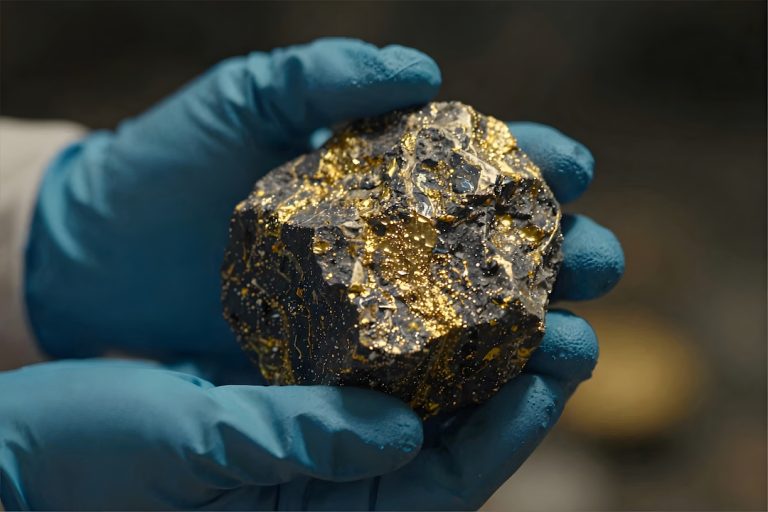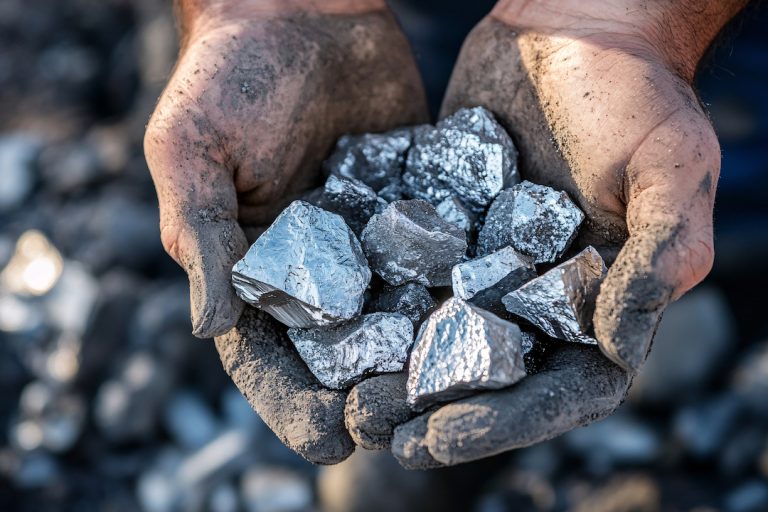
If you invest in mining stocks, there is a very high probability that a significant number of the companies you follow are listed in Canada. According to TMX Group — the operator of both the Toronto Stock Exchange and the TSX Venture Exchange — approximately 40% of all publicly listed mining companies in the world trade on one of these two Canadian exchanges. No other exchange group comes close.
Understanding the difference between the TSX and the TSXV, how each exchange works, and what listing on each means for a mining company is fundamental knowledge for any mining investor. This guide explains it all in plain English.
Two Exchanges, One Ecosystem
The Toronto Stock Exchange (TSX) and the TSX Venture Exchange (TSXV) are Canada’s two main national stock exchanges, both operated by TMX Group. They serve different purposes and different types of companies — but together they form the world’s largest and most liquid market for mining stocks.
Think of the two exchanges as a two-stage pipeline:
- The TSXV — TSX Venture Exchange — is the entry point. It is designed for early-stage companies — junior explorers, developers, and small producers — that are too small or too early in their development to meet the stricter requirements of the main TSX. The TSXV is described by TMX Group as a public venture capital marketplace for emerging companies.
- The TSX — Toronto Stock Exchange — is the senior exchange. It lists more established, larger, and more financially developed companies: established producers, mid-tier miners, and the major gold and base metals companies. To list on the TSX, a company must meet higher thresholds for assets, revenues, reserves, or market capitalization depending on its stage of development.
Companies graduate from the TSXV to the TSX as they grow. From 2000 to 2025, more than 300 mining companies made that transition, according to TMX Group data. This graduation pathway is one of the defining features of the Canadian mining finance ecosystem — capital follows companies from exploration through to production on the same exchange group.
The Scale of Canadian Mining Finance
The numbers tell the story most clearly. According to TMX Group, as of December 31, 2025, the total market capitalization of the TSXV alone stood at approximately C$141.8 billion — a 60% increase from C$88.8 billion at the end of 2024, driven largely by surging gold prices and renewed appetite for junior mining stocks. The combined TSX and TSXV hit an all-time record combined market capitalization of C$4.8 trillion in July 2025.
In 2025, more than 65 billion mining company shares were traded on the TSX and TSXV combined. More than 250 global analysts cover TSX and TSXV-listed mining companies. Approximately 40% of all trading on the two exchanges originates outside Canada — meaning international investors are a dominant force in Canadian mining markets.
In February 2026, the TSX Venture Exchange published its annual TSX Venture 50 rankings for 2025 performance. The top 50 companies on the TSXV collectively grew their combined market capitalization by C$17.9 billion during 2025 — the largest increase since the program launched in 2006. Mining companies dominated the list, with the top performers averaging share price increases of 431% over the year.
The TSX — Canada’s Senior Mining Exchange
The Toronto Stock Exchange has been providing companies with access to equity capital for more than 160 years. It is Canada’s primary market for established, producing mining companies and is home to some of the world’s most important gold, silver, copper, and diversified miners.
Notable TSX-listed mining companies include Barrick Gold (TSX: ABX), Agnico Eagle Mines (TSX: AEM), Kinross Gold (TSX: K), Pan American Silver (TSX: PAAS), First Quantum Minerals (TSX: FM), and Lundin Mining (TSX: LUN), among many others. Many of these companies are also dual-listed on US exchanges — typically the NYSE or NYSE American — given the depth of capital available in both Canadian and US institutional markets.
Listing on the TSX requires meeting one of several sets of criteria depending on the company’s stage. For mining companies, the TSX has specific listing standards covering mineral reserves or resources, development plans, management experience, and financial condition. All TSX-listed mining companies must comply with NI 43-101 for their mineral project disclosures.
The TSXV — The World’s Junior Mining Exchange
The TSX Venture Exchange was created in 2001 through the consolidation of several regional Canadian stock exchanges including the Vancouver Stock Exchange — historically the global heartland of junior mining finance. The TSXV inherited Vancouver’s deep culture of junior mining investment and has built on it to become the world’s pre-eminent marketplace for early-stage mining companies.
As of December 31, 2025, there were 1,531 companies listed on the TSXV, with approximately 8% being foreign-based issuers, according to Baker McKenzie’s Cross-Border Listings Guide. Mining companies make up the dominant sector, accounting for the majority of listings and trading activity.
The TSXV is specifically structured for companies that are not yet generating revenues — junior exploration companies that are drilling for their first resources, developers advancing towards feasibility studies, and small producers in their early operating years. Listing requirements on the TSXV are significantly lower than the TSX, reflecting the higher-risk, earlier-stage nature of these companies.
For investors, the TSXV is where the highest-risk and potentially highest-reward part of the mining investment cycle lives. A discovery announcement on the TSXV can send a stock up hundreds of percent overnight. A failed drill program can send it the other way. The TSXV is explicitly a venture market — the clue is in the name.
NI 43-101 — The Standard That Underpins Both Exchanges
All mining companies listed on both the TSX and TSXV are required to comply with NI 43-101 — Canada’s mandatory mining disclosure standard — when making public statements about their mineral projects. This means all resource estimates, drill results, and technical reports must be prepared or approved by an independent, credentialed Qualified Person.
NI 43-101 is the primary quality control mechanism that makes Canadian mining disclosures credible and internationally comparable. Mining Markets Report covers NI 43-101 in full detail in a separate explainer.
Who Regulates the TSX and TSXV?
Both exchanges are operated by TMX Group, a publicly listed company (TSX: X). Securities regulation in Canada operates at the provincial and territorial level — there is no single national securities regulator equivalent to the SEC in the US. The Canadian Securities Administrators (CSA) is the umbrella body coordinating the 13 provincial and territorial regulators, and the major provincial regulators — the Ontario Securities Commission (OSC), the British Columbia Securities Commission (BCSC), and others — have authority over the companies listed in their jurisdictions.
The exchanges themselves also play a front-line regulatory role under their listing rules, monitoring continuous disclosure compliance and JORC/NI 43-101 reporting standards.
Trading Hours and Access
Both the TSX and TSXV trade during the same hours: 9:30am to 4:00pm Eastern Time (ET) on weekdays, with a pre-market session from 7:00am ET. This aligns with US Eastern markets, making the exchanges accessible to North American and European investors during overlapping trading hours.
International investors can access TSX and TSXV-listed stocks through most international brokerage platforms that offer Canadian market access. Many larger TSX-listed mining companies are also accessible through US OTC markets under OTC ticker symbols for investors whose brokers do not offer direct Canadian market access.
Key Takeaways for Investors
- The TSX and TSXV together list approximately 40% of all public mining companies in the world — more than any other exchange group
- Both are operated by TMX Group and based in Toronto, Canada
- The TSXV is for early-stage and junior companies; the TSX is for more established producers and developers
- Companies graduate from TSXV to TSX as they grow — more than 300 mining companies made this transition between 2000 and 2025
- All TSX and TSXV mining companies must comply with NI 43-101 for mineral project disclosures
- The combined TSX/TSXV hit a record C$4.8 trillion market cap in July 2025; the TSXV alone reached C$141.8 billion by year end 2025
- TSX and TSXV trade 9:30am–4:00pm Eastern Time, aligned with US markets
- About 40% of trading on both exchanges originates from outside Canada — they are genuinely global markets
SOURCES
1. TMX Group — Mining on TSX and TSXV: https://www.tsx.com/en/listings/listing-with-us/sector-and-product-profiles/mining
2. Baker McKenzie Cross-Border Listings Guide — TSX Venture Exchange: https://resourcehub.bakermckenzie.com/en/resources/cross-border-listings-guide/north-america/tsx-venture-exchange/topics/overview-of-exchange
3. Mining.com — Mining Stocks Dominate TSXV Top Performers List 2026: https://www.mining.com/mining-stocks-dominate-tsxvs-top-performers-list
4. Globe and Mail — Mining Sector Leads TSX Venture 50, 2026: https://www.theglobeandmail.com/investing/markets/markets-news/Newsfile/276168/mining-sector-leads-unprecedented-market-cap-surge-on-the-2026-tsx-venture-50tm/
5. Mining.com.au — Transformation of the TSX Venture Exchange: https://mining.com.au/transformation-of-the-tsx-venture-exchange/
6. Ontario Mining 2025 — TSX and TSXV Interview: https://projects.gbreports.com/ontario-mining-2025-interactive/toronto-stock-exchange-tsx-and-tsx-venture-exchange-tsxv-interview
7. TMX Group Q2 2025 Mining Highlights Report: https://www.tsx.com
DISCLAIMER
This article is an educational explainer based on publicly available information. All statistics and exchange data were current as of May 2026. Exchange statistics, listed companies, and market capitalization figures change frequently — readers should consult tsx.com for current data.
Mining Markets Report has not received compensation from TMX Group, the TSX, the TSXV, or any listed company in connection with this article.
The information provided is for informational and educational purposes only and does not constitute financial, investment, legal, or professional advice. Readers are encouraged to conduct their own due diligence and consult a qualified professional before making any investment decision.
For full terms, see our Disclaimer.