As covered in our earlier uranium explainer, global uranium demand is projected to rise sharply through 2040, driven substantially by a new and unexpected source: the electricity needs of AI data centers. A significant part of that story involves a specific nuclear technology — small modular reactors, or SMRs — that major technology companies are increasingly betting on as a way to power the AI computing boom. Here is what SMRs are, and why they’ve become such a significant part of the uranium demand conversation.
The Short Answer
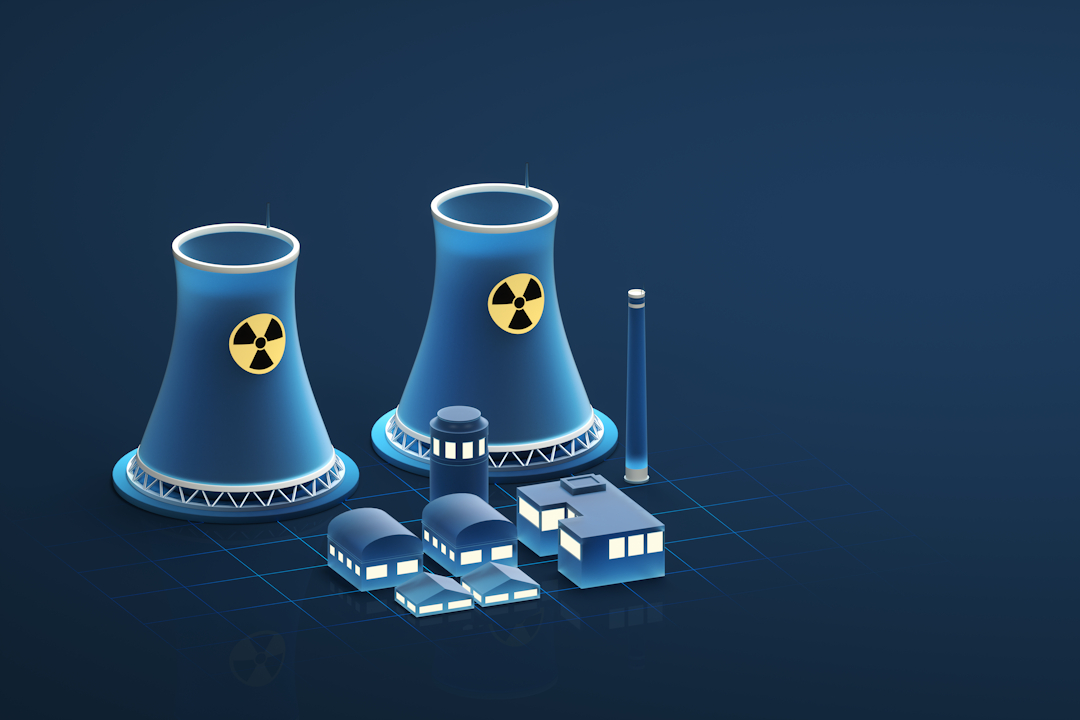
Small modular reactors are nuclear power reactors built at a smaller scale than conventional plants, designed for factory fabrication and modular assembly rather than fully bespoke on-site construction. Their smaller footprint, potentially lower upfront capital cost, and better fit with concentrated, high-demand electricity users like data centers have made them central to a new wave of technology company investment in nuclear power.
What Makes SMRs Different From Conventional Reactors
Traditional nuclear power plants are massive, custom-engineered facilities, often exceeding 1,000 megawatts of generating capacity, built through years of bespoke on-site construction. SMRs, by contrast, are generally designed to generate up to around 300 megawatts or less per unit, and — critically — are engineered so that major reactor components can be manufactured in a factory setting and shipped to the site for assembly, rather than built entirely from scratch on location.
This modular, factory-based approach is intended to address two of the biggest historical problems with nuclear power construction: massive upfront capital costs and notoriously unpredictable construction timelines, both of which have made large-scale conventional nuclear plants difficult to finance and build on schedule in many Western countries in recent decades. Multiple smaller units can also be added incrementally as electricity demand grows, rather than requiring the entire massive capital commitment of a conventional plant upfront.
Why AI Data Centers Are Driving SMR Interest
AI computing infrastructure has a distinctive electricity demand profile: it requires enormous, extremely reliable, round-the-clock power delivered to a concentrated physical location — exactly the kind of demand nuclear power is well suited to serve, since reactors run continuously regardless of weather, unlike solar or wind. As covered in our uranium explainer, several major technology companies have signed substantial long-term nuclear power agreements specifically to secure electricity for data center operations, including Meta’s commitments to secure up to 6.6 gigawatts of nuclear power by 2035, and Amazon’s power purchase agreement with Talen Energy.
SMRs are particularly attractive to this specific use case for several reasons: their smaller physical footprint can potentially be sited closer to or directly co-located with data center campuses, reducing the transmission infrastructure needed; their modular scalability allows capacity to be added in step with data center expansion plans; and technology companies with strong balance sheets are positioned to help fund and de-risk the first-of-a-kind capital costs that have historically slowed nuclear construction — a financing dynamic increasingly described as central to the current SMR investment wave.
The Connection to Uranium Demand
Every operating nuclear reactor, whether conventional or modular, requires uranium fuel throughout its operational life. As covered in our earlier explainer, global uranium demand is projected to rise approximately 28% by 2030 and nearly double by 2040 — and the anticipated buildout of SMRs specifically, alongside life extensions of existing conventional reactors and continued large-scale reactor construction in countries like China, is a meaningful contributor to that projected growth curve.
It’s worth noting that this demand growth is a longer-term structural driver rather than an immediate one — SMR projects still require years of design certification, regulatory approval, and construction before reaching commercial operation, meaning their contribution to actual uranium consumption will build gradually over the coming decade rather than arriving all at once.
Where SMR Development Stands
SMR technology is still in a relatively early commercial deployment phase globally compared to conventional nuclear power, with multiple different reactor designs from various vendors moving through regulatory certification and pilot project stages in the US, Canada, and other countries. The technology’s ultimate commercial success will depend significantly on whether the promised advantages in cost, construction timeline, and modularity are actually realized at scale, since the nuclear industry has a long history of announced projects facing delays and cost overruns relative to initial projections — a risk factor worth keeping in mind alongside the genuine strategic momentum currently building behind the technology.
Key Takeaways for Investors
- Small modular reactors (SMRs) are smaller, factory-fabricated nuclear reactors — generally up to around 300 MW per unit — designed to address the cost and construction timeline challenges of conventional nuclear plants
- Major technology companies are increasingly investing in nuclear power, including SMRs, to secure reliable, round-the-clock electricity for AI data center operations
- Meta and Amazon are among the companies that have signed substantial long-term nuclear power agreements tied to data center electricity needs
- SMR and broader data-center-driven nuclear demand is a meaningful contributor to projected uranium demand growth of 28% by 2030 and nearly double by 2040
- SMR technology remains in a relatively early commercial deployment phase, and its contribution to actual uranium consumption will build gradually over the coming decade
- Execution risk — delays and cost overruns relative to initial projections — has historically affected nuclear projects and remains a relevant factor for SMR development specifically
SOURCES
1. World Nuclear Association — World Uranium Mining Production: https://world-nuclear.org/information-library/nuclear-fuel-cycle/mining-of-uranium/world-uranium-mining-production
2. DataM Intelligence — Uranium Market Size, Share, Growth and Trends Report 2026: https://www.datamintelligence.com/research-report/uranium-market
DISCLAIMER
This article is an educational explainer based on publicly available industry data, market research, and published analyst commentary. Information was current as of the publication date noted below. Commodity price data and forecasts are sourced as cited and reflect market conditions at the time of writing.
Mining Markets Report has not received compensation from any company, institution, or organization in connection with this article.
Institutional price forecasts and analyst commentary referenced in this article represent third-party opinions at the time of publication and are not guarantees of future commodity performance.
The information provided is for informational and educational purposes only and does not constitute financial, investment, or professional advice. Readers are encouraged to conduct their own due diligence and consult a qualified financial advisor before making any investment decision.
For full terms, see our Disclaimer.