Highlights
- PMET Resources Inc. (TSX: PMET; ASX: PMT; OTCQX: PMETF; FSE: R9GA) has completed more than 30,000 m of drilling in over 250 holes at its 100%-owned Shaakichiuwaanaan Project in Quebec since June, with seven rigs still active.
- An updated Mineral Resource Estimate (MRE-5), an updated CV5 lithium-tantalum Feasibility Study and a CV5-CV13 Preliminary Economic Assessment are expected before year-end.
- No new assay results were released; the company expects assays from the 2026 program through Q1 2027.
PMET Resources Inc. (TSX: PMET; ASX: PMT; OTCQX: PMETF; FSE: R9GA) has drilled more than 30,000 meters across over 250 holes at its Shaakichiuwaanaan Project since June, according to a release distributed via PRNewswire on October 20, 2026. Seven rigs are still turning. The company expects to finish in mid-November.
The project sits in the Eeyou Istchee James Bay region of Quebec, reachable year-round by all-season road. It already has a Feasibility Study behind it. This season was about getting it closer to construction.
Testing the Ground Under a Future Mine
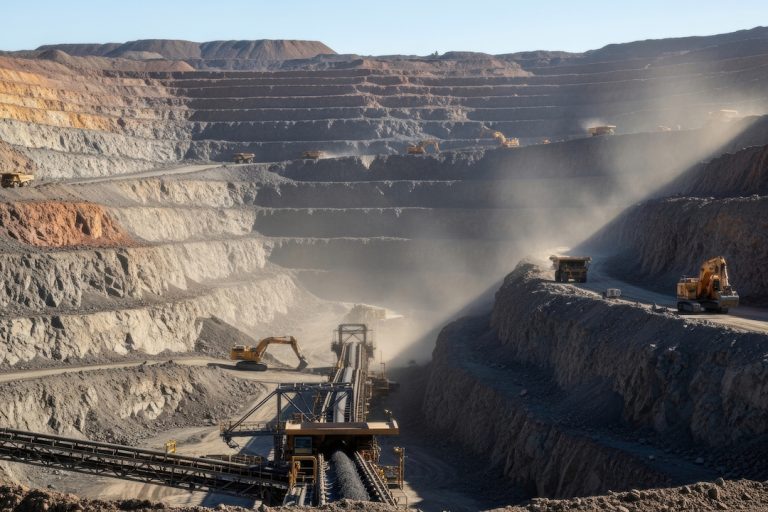
Much of the meterage went into engineering holes rather than exploration. PMET drilled geotechnical, hydrogeological and geomechanical holes at the CV5 and CV13 pegmatites and around proposed infrastructure sites. Put simply, that means checking soil stability, depth to bedrock, water quality and how the rock holds up under stress.
That data feeds detailed engineering and permitting. PMET says results so far confirm ground conditions are sound for mine-planning purposes.
Some holes were condemnation drilling. The name sounds grim. The job is practical: proving there’s no valuable mineralization under the spot where a building or waste rock pile will go. Nobody wants to pour a foundation over ore.
Cesium Moves Up the Agenda
Tightly spaced infill holes at CV5 targeted a cesium-enriched zone inside the open pit designed in the 2025 Feasibility Study. Infill drilling fills the spaces between existing holes to firm up the geology. The goal is a maiden cesium resource at CV5. PMET’s summary puts that in 2027; the detailed text says late 2027.
Cesium is a small, specialized market. Its main uses include cesium formate, a heavy fluid used in high-pressure oil and gas wells, and atomic clocks. Pollucite, the main ore mineral, is rare, and the U.S. Geological Survey has designated cesium a critical mineral.
PMET already reports a cesium resource at CV13’s Rigel and Vega zones: 0.69 million tonnes at 4.40% Cs2O (cesium oxide) Indicated and 1.70 million tonnes at 2.40% Cs2O Inferred, effective June 20, 2025. The company calls it the world’s largest pollucite-hosted cesium pegmatite resource.
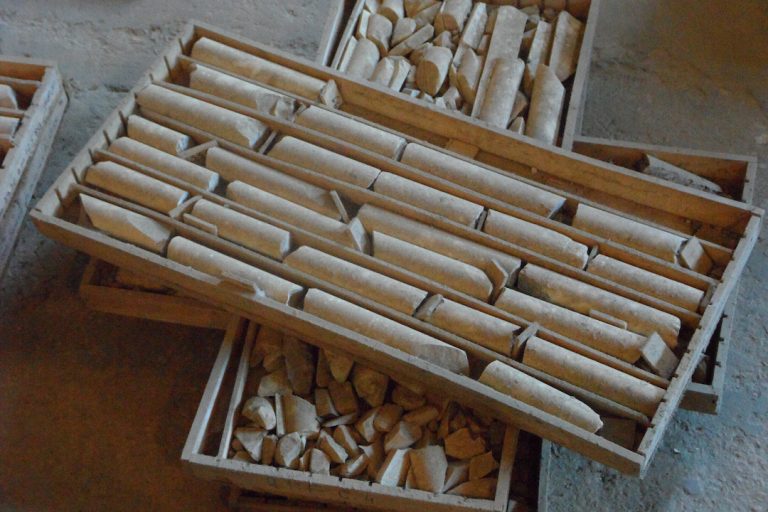
Two shallow coring rigs also collected pollucite samples under what PMET calls its BerryPick program. The company estimates at least 7 tons were gathered. That material is headed for X-ray transmission ore-sorting tests in early 2027. The method scans broken rock and separates ore from waste before processing.
Upgrades and a Gap to Fill
More infill holes are planned at CV13 before the season closes, aimed at upgrading parts of the resource from Inferred to Indicated. Those labels describe confidence. Inferred rests on limited sampling. Indicated has enough data to be used in mine planning.
A barge-mounted rig is working the gap between CV4 and CV5, which PMET considers highly prospective for lithium-cesium-tantalum (LCT) pegmatite. Only part of it will be tested this year, through step-out holes from each end.
What Comes Next
The bigger near-term event is paperwork. PMET says MRE-5, the project’s fifth resource estimate, will be announced shortly. It will underpin an updated lithium-tantalum Feasibility Study at CV5 and a Preliminary Economic Assessment covering lithium, cesium and tantalum across CV5 and CV13. Assays from this season are slated for a later update, MRE-6, expected in the second half of 2027.
For scale, the October 2025 Feasibility Study declared a Probable Mineral Reserve of 84.3 million tonnes at 1.26% Li2O (lithium oxide, the standard way lithium grades are reported) at CV5. The consolidated resource is 108.0 million tonnes at 1.40% Li2O and 166 ppm Ta2O5 Indicated, plus 33.4 million tonnes at 1.33% Li2O and 155 ppm Ta2O5 Inferred, effective June 20, 2025. Resources include reserves and are not themselves reserves.
PMET reports under Canada’s NI 43-101. Because it also trades on the ASX, the release carries a parallel Competent Person statement under Australia’s JORC Code, the Australian counterpart.
Neither Qualified Person is independent. Remy Delporte, P.Geo., who approved the drilling and resource information, is a PMET Project Geologist holding shares and options. Frédéric Mercier-Langevin, who approved the reserve and Feasibility Study information, is the company’s Chief Operating and Development Officer and holds shares, RSUs, PSUs and options.
Sources
Editorial Disclosure
This article is based on a corporate press release issued by PMET Resources Inc. on October 20, 2026 (October 21 in Sydney, Australia), and distributed via PRNewswire. Securities discussed: PMET Resources Inc. (TSX: PMET | ASX: PMT | OTCQX: PMETF | FSE: R9GA). Mining Markets Report has not received compensation from PMET Resources, its management, investor relations representatives, or any third party for the creation of this specific coverage. No staff member, principal, or affiliate of Mining Markets Report holds a position, option, or interest in this security as of the publication date. Operational updates, including the timing of drill program completion and assay results, the anticipated MRE-5 Mineral Resource Estimate, the updated CV5 Feasibility Study, the CV5-CV13 Preliminary Economic Assessment, the potential definition of a maiden cesium Mineral Resource, and potential resource category upgrades, are forward-looking statements. They are subject to operational risks, geological uncertainties, and regulatory approvals; actual outcomes and timing may differ materially. Mineral Resources are not Mineral Reserves and do not have demonstrated economic viability. The Qualified Persons named in the source release are an employee and an officer of PMET Resources and are not independent of the company. Mineral exploration and development-stage mining stocks carry a high degree of financial risk. Development-stage companies often have no revenues, are speculative in nature, and can result in the total loss of invested capital. This overview is published strictly for informational, news-reporting, and educational market context purposes only. It does not constitute an investment recommendation, endorsement, or professional financial, legal, or tax advice.
For further details regarding our editorial independence, publishing policies, and full risk disclaimers, please see our full Terms & Disclaimers Page