Highlights
- PMET Resources Inc. (TSX: PMET; ASX: PMT; OTCQX: PMETF) shareholders approved every resolution at the September 29, 2026 annual meeting and re-elected all six directors, with 47.615% of outstanding shares represented.
- CEO Kenneth Brinsden’s FY2027 award of up to $500,000 in RSUs and $500,000 in PSUs passed with 80.744% support, the lowest approval on the ballot.
The meeting was procedural; no new resource, reserve, drilling, or financing figures were released.
PMET Resources Inc. (TSX: PMET; ASX: PMT; OTCQX: PMETF; FSE: R9GA) reported on September 29, 2026, in a release distributed via PRNewswire, that shareholders approved every resolution at its annual general meeting in Montréal. All six directors were re-elected.
The margins tell investors more. Most items cleared with about 92% support.
Turnout was modest. About 88.5 million shares were represented, or 47.615% of the shares outstanding at the August 10 record date. Less than half the register voted.
CEO Pay Takes the Biggest Hit
Resolution 10 lets PMET grant President and CEO Kenneth Brinsden up to $500,000 in restricted share units (RSUs) and another $500,000 in performance share units (PSUs) for fiscal 2027. RSUs convert to shares over time. PSUs pay out only if preset targets are met.
It passed with 80.744% in favor. Nearly 15.9 million shares, or 19.181%, voted against. No other item drew that much opposition.
Some proxy advisers treat opposition around 20% as the point where a board is expected to show it has listened. Brinsden’s award landed just under that line. A broader item approving unallocated awards under the company’s omnibus equity incentive plan passed with 86.928%.
Director Pierre Boivin was re-elected with 82.608%, while 17.392% of votes were withheld. Canadian director elections have no “against” option, so withholding is how shareholders register dissent. His separate grant of up to $150,000 in deferred share units (DSUs), equity that directors generally can’t cash out until they leave the board, passed with 84.856%.
The other five nominees drew between 89.479% and 92.077%.
Housekeeping for the ASX
Shareholders also ratified seven share issuances made between November 2025 and May 2026, each with roughly 92% support. They included 420,958 shares apiece to Azimut Exploration Inc. and SOQUEM Inc. for the Pikwa Property, two issues to Volkswagen Finance Luxemburg S.A. totaling 2,184,870 shares, and 19,841,985 shares from the February 19, 2026 financing. That last group combined charity flow-through shares (a Canadian structure that passes exploration tax deductions to investors), a so-called Hard Placement, and an over-allotment option.
Why bother? PMET also trades in Sydney, and ASX rules generally cap how many new shares a company can issue in a year without a shareholder vote. Ratifying earlier issues typically restores that headroom, keeping financing options open.
The two Volkswagen items also needed a majority-of-minority vote, which sets aside insider shares. With about 17.7 million insider shares excluded, both passed with about 90.2%.
Why Volkswagen Keeps Appearing
Volkswagen Group bought a 9.9% stake in the company, then called Patriot Battery Metals, for about C$69 million in a deal that closed in January 2025. Its battery arm, PowerCo, holds a binding offtake term sheet for 100,000 tonnes a year of spodumene concentrate over 10 years. In May 2026, PMET said Volkswagen had approved roughly C$12 million for its part in the February financing. Albemarle is the other major strategic holder, having paid about C$109 million for 4.9% in 2023.
The Project Behind the Vote
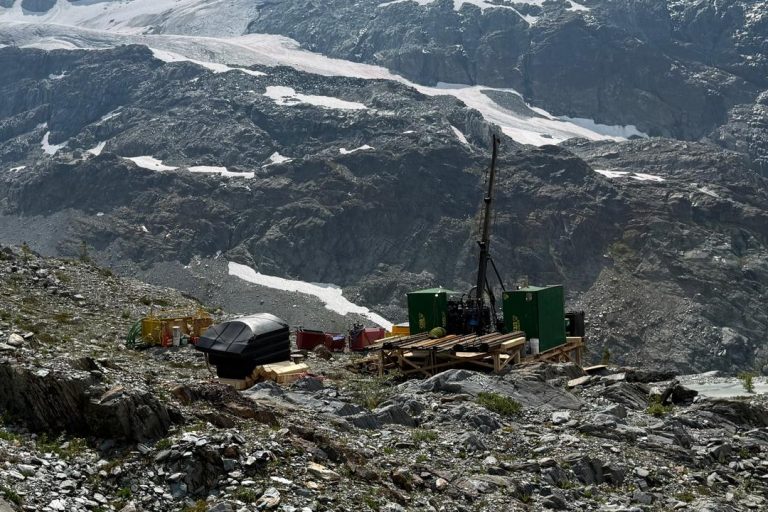
PMET’s focus is the 100%-owned Shaakichiuwaanaan Project in Quebec’s Eeyou Istchee James Bay region. An October 2025 lithium-only Feasibility Study on the CV5 Pegmatite outlined an approximately 20-year mine life and up to about 800,000 tonnes a year of spodumene concentrate, the lithium mineral product sold to chemical converters. It declared a Probable Mineral Reserve of 84.3 million tonnes at 1.26% Li2O (lithium oxide, the standard grade measure).
The wider Mineral Resource, reported under Canada’s NI 43-101 and its Australian counterpart, the JORC Code, stands at 108.0 Mt at 1.40% Li2O Indicated and 33.4 Mt at 1.33% Li2O Inferred, the lowest-confidence tier. Resources carry no demonstrated economic viability. Cesium zones add 0.69 Mt at 4.40% Cs2O Indicated and 1.70 Mt at 2.40% Cs2O Inferred.
Last week the company reported bench-scale cesium processing results with Koch Technology Solutions. A Preliminary Economic Assessment targeted for the fourth quarter of 2026 is meant to give the first economic read on cesium as a by-product.
The release’s technical information was approved by Darren L. Smith, Vice President of Exploration, and Frédéric Mercier-Langevin, Chief Operating and Development Officer. Both are PMET officers who hold equity in the company, not independent consultants.
None of the project fundamentals moved on Tuesday. What the meeting did show is a sizable minority uneasy about executive pay.
Sources
- PMET Resources Inc.: Results of Annual General Meeting of Shareholders, PRNewswire, September 29, 2026
- PMET Resources Inc.: PMET Successfully Completes Phase 2 Caesium Testwork Program with Koch Technology Solutions, PRNewswire, September 22, 2026
- PMET Resources Inc.: PMET Resources Invited to Participate in Prime Minister Carney’s Canada Investment Summit, PRNewswire, September 14, 2026
- PMET Resources Inc.: PMET Resources Receives Government-Backed Letters of Support for Shaakichiuwaanaan Financing, PRNewswire (via The Manila Times), May 19, 2026
- Patriot Battery Metals Inc.: Patriot Announces Closing of C$69 Million Strategic Investment, Offtake and Strategic Partnership with Volkswagen and PowerCo, PRNewswire, January 21, 2025
- Patriot Battery Metals Inc.: Patriot Battery Metals Announces Proposed Name Change to PMET Resources, PRNewswire, September 15, 2025
Editorial Disclosure
This article is based on a corporate press release issued by PMET Resources Inc. on September 29, 2026, and distributed via PRNewswire, with background drawn from the company’s earlier public releases as listed in Sources. Securities discussed: PMET Resources Inc. (TSX: PMET | ASX: PMT | OTCQX: PMETF | FSE: R9GA). Mining Markets Report has not received compensation from PMET Resources, its management, investor relations representatives, or any third party for the creation of this specific coverage. No staff member, principal, or affiliate of Mining Markets Report holds a position, option, or interest in this security as of the publication date. Statements regarding the Feasibility Study, production capacity, mine life, Mineral Resource and Mineral Reserve estimates, cesium testwork, and the planned Preliminary Economic Assessment are forward-looking statements. They are subject to operational risks, geological uncertainties, financing, market conditions, and regulatory approvals; actual outcomes and timing may differ materially. Mineral exploration and development-stage mining stocks carry a high degree of financial risk. Development-stage companies often have no revenues, are speculative in nature, and can result in the total loss of invested capital. This overview is published strictly for informational, news-reporting, and educational market context purposes only. It does not constitute an investment recommendation, endorsement, or professional financial, legal, or tax advice.
For further details regarding our editorial independence, publishing policies, and full risk disclaimers, please see our full Terms & Disclaimers Page