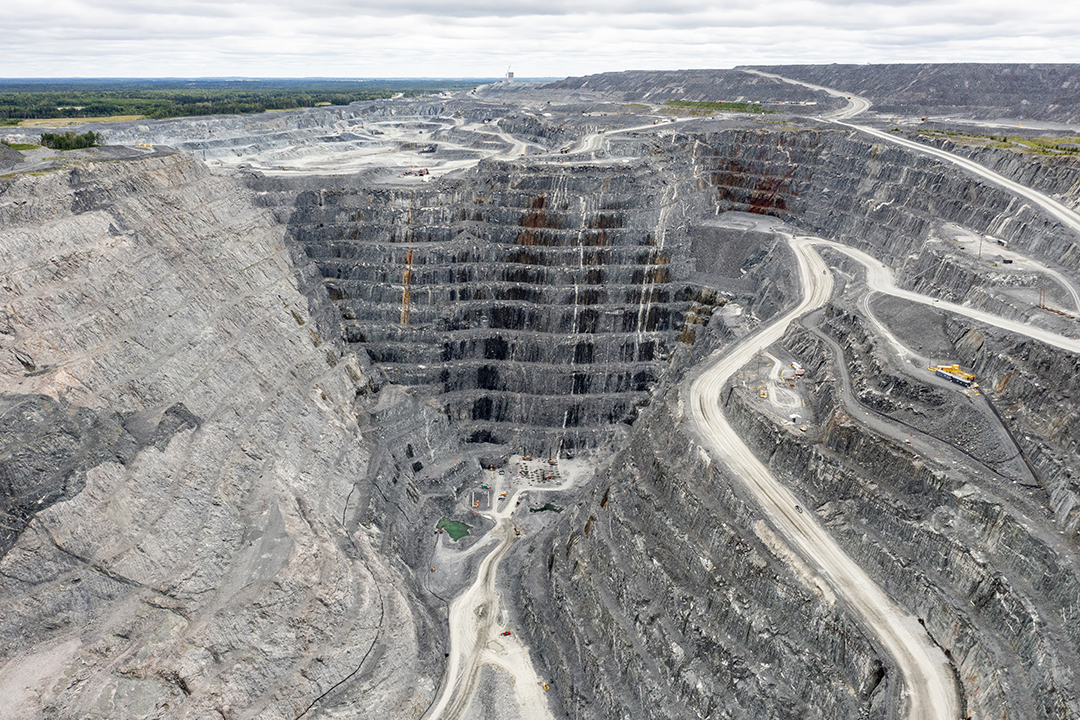
Open pit mining is the most widely used method of extracting minerals on the planet, responsible for the majority of the world’s copper, iron ore, and a significant share of its gold production. Anyone who has seen a satellite photo of a mine — concentric rings stepping down into the earth like an amphitheater — has seen an open pit. This guide explains exactly how the process works, from initial planning through to final reclamation.
The Short Answer
Open pit mining is a surface mining method used when a mineral deposit is located relatively close to the surface. Operators remove the overlying waste rock, then use drilling, blasting, loading, and hauling to extract the ore in a series of descending terraced steps called benches.
Why Open Pit Instead of Underground?
The choice between open pit and underground mining comes down to depth and economics. Open pit mining is generally favored when the ratio of waste rock (called overburden) to ore is low enough that removing it remains economically worthwhile — generally when deposits sit within a few hundred meters of the surface. It allows the use of much larger, more efficient equipment than underground mining, enabling faster production and making even lower-grade ore economically viable. The Bingham Canyon Mine in Utah — one of the world’s largest open pit copper mines, spanning more than 1,900 acres — illustrates the scale this method can reach.
Step 1: Exploration and Feasibility
Before any digging begins, geologists drill exploration holes to determine the size, shape, and grade — meaning the concentration of valuable mineral — of the deposit. This data is compiled into a block model, dividing the deposit into a three-dimensional grid of blocks, each assigned an estimated grade. Engineers then run a feasibility study, comparing the economic value of extracting each block against the cost of removing all the waste rock that sits above and around it, to determine the most profitable final pit shape — a process known as pit optimization.
Step 2: Site Preparation and Overburden Removal
Once a project is approved and permitted, the site is cleared of vegetation, and infrastructure — power, water, haul roads — is built to support heavy equipment. The first major mining activity is overburden removal: stripping away the layer of soil and rock that sits above the ore body. Soft material can be scraped away with bulldozers and excavators; harder rock requires drilling and blasting, just like the ore itself.
The ratio of waste rock removed to ore extracted is called the strip ratio. A low strip ratio means less waste relative to ore and lower costs; a high strip ratio means more material must be moved for the same amount of mineral recovered, directly affecting a mine’s profitability.
Step 3: Drilling and Blasting
Once ore-bearing rock is exposed, it must be fragmented before it can be loaded and hauled. Drill rigs — ranging from small portable units to large mechanized rigs using GPS-guided hole placement — bore a defined pattern of holes into the rock. These holes are loaded with explosives, most commonly ANFO (ammonium nitrate/fuel oil), and detonated in a precisely sequenced pattern using electronic detonators to control fragmentation and minimize disturbance to surrounding rock and nearby communities.
Step 4: Loading and Hauling
After blasting, the broken rock is loaded by large hydraulic excavators or shovels — some capable of moving more than 100 tonnes per scoop — into haul trucks. The largest mining haul trucks, such as the Caterpillar 797F, can carry more than 400 tons of material per load, with tires taller than a person. Ore is hauled to a processing plant or stockpile; waste rock is hauled to a designated waste dump.
Step 5: The Bench System
Open pits are excavated in a series of horizontal steps called benches, typically ranging from 4 to 60 meters in height depending on the equipment used and the mineral being mined — generally larger for high-volume copper or iron ore mines and smaller for high-grade operations like uranium. This stepped design serves two critical purposes: it provides safe, stable working platforms at each level, and it distributes the structural load of the pit walls to prevent large-scale slope failures. The pit walls are mined at a carefully calculated angle — steep enough to minimize unnecessary waste removal, but shallow enough to remain geotechnically stable as the pit deepens.
Step 6: Ore Processing
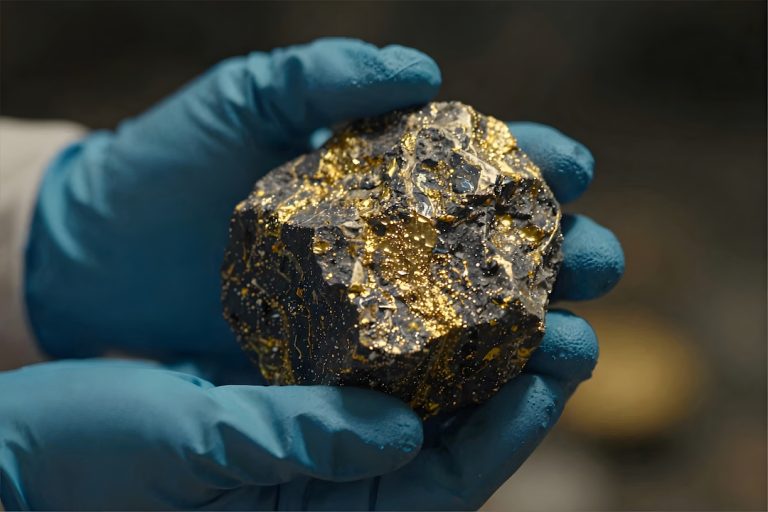
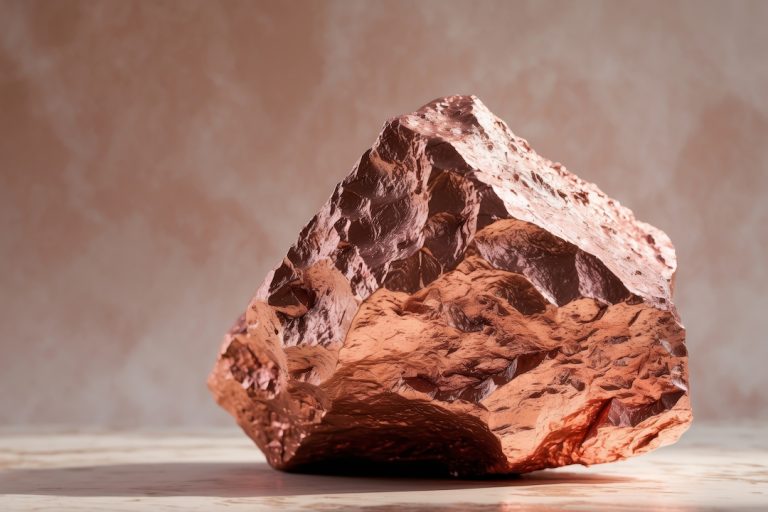
Extracted ore typically moves to a processing plant, usually located near the pit. Raw ore is first crushed into smaller fragments by jaw or cone crushers, then ground into a fine powder in ball mills. From there, the specific extraction method depends on the mineral: copper ore is typically processed using froth flotation (a method using chemicals and air bubbles to separate copper-bearing particles), while gold ore is frequently processed using cyanide leaching to dissolve and recover microscopic gold particles.
Step 7: Reclamation and Closure
Open pit mines operate until either the economically mineable resource is exhausted or the strip ratio becomes too unfavorable to continue profitably. At closure, waste dumps are recontoured and stabilized, and — for sulfide-bearing waste, which can generate acid mine drainage when exposed to air and water — covered with clay and soil to limit oxidation before vegetation is replanted. The pit itself is typically fenced and, depending on local groundwater levels, may gradually fill with water over time, sometimes forming a pit lake.
Automation and Modern Technology
Open pit mining has increasingly adopted automation: autonomous haul trucks now operate at numerous major mines, removing drivers from one of the highest-risk roles in the operation; drones conduct aerial slope-stability surveys; and AI-assisted systems optimize drilling patterns and blast design. These technologies are primarily aimed at improving safety — open pit mining remains one of the more hazardous industrial sectors due to the scale of equipment and the inherent risks of slope failure — as well as improving efficiency and reducing costs.
Key Takeaways for Investors
- Open pit mining is used when ore is close enough to the surface that removing the overlying waste rock remains economical
- The strip ratio — waste rock removed versus ore extracted — is a critical driver of a mine’s overall profitability
- The process follows four core unit operations in cycle: drilling, blasting, loading, and hauling
- Pits are mined in a series of benches that provide safety and structural stability as the pit deepens
- Processing method depends on the mineral — froth flotation for copper, cyanide leaching for much gold
- Reclamation and closure planning, including acid mine drainage prevention, is a required part of the mine lifecycle in most jurisdictions
- Automation — autonomous trucks, drones, AI-assisted blast design — is increasingly used to improve safety and efficiency
SOURCES
1. Identec Solutions — The Open Pit Mining Process: Everything You Need to Know: https://www.identecsolutions.com/news/the-open-pit-mining-process-everything-you-need-to-know
2. Britannica — Mining: Strip, Open-Pit, Quarrying: https://www.britannica.com/technology/mining/Surface-mining
3. Anglo American — Open-Pit Mining Definition: https://www.angloamerican.com/futuresmart/stories/our-industry/mining-explained/mining-terms-explained-a-to-z/open-pit-mining-definition
4. Wikipedia — Open-pit mining: https://en.wikipedia.org/wiki/Open-pit_mining
5. Mining North Works — Open-pit Mining: https://miningnorthworks.com/open-pit/
6. IntechOpen — Open Pit Mining: https://www.intechopen.com/chapters/71931
DISCLAIMER
This article is an educational explainer based on publicly available industry data, market research, and published analyst commentary. Information was current as of the publication date noted below. Commodity price data and forecasts are sourced as cited and reflect market conditions at the time of writing.
Mining Markets Report has not received compensation from any company, institution, or organization in connection with this article.
Institutional price forecasts and analyst commentary referenced in this article represent third-party opinions at the time of publication and are not guarantees of future commodity performance.
The information provided is for informational and educational purposes only and does not constitute financial, investment, or professional advice. Readers are encouraged to conduct their own due diligence and consult a qualified financial advisor before making any investment decision.
For full terms, see our Disclaimer.