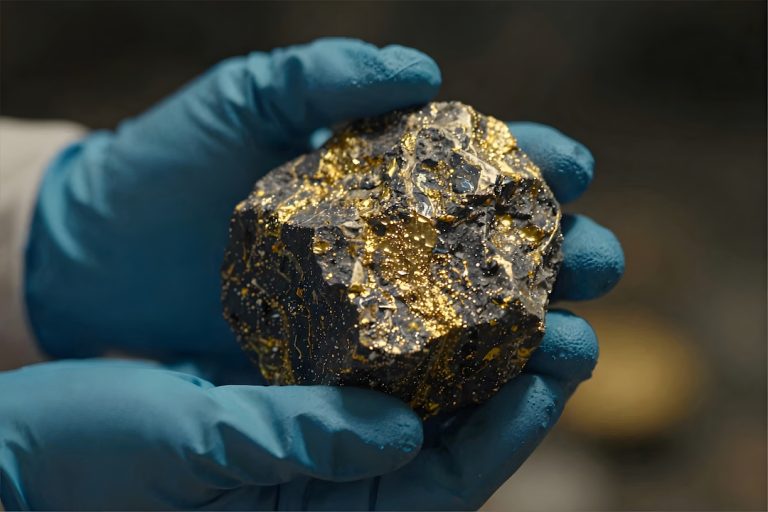
Open almost any quarterly earnings release from a gold mining company and you will find a figure reported in dollars per ounce called All-In Sustaining Cost, or AISC. It is arguably the single most important operating metric in the gold mining industry — the number analysts, investors, and company management all use to compare how efficiently one gold producer is running relative to another. Here is exactly what it measures and why it matters.
The Short Answer
All-In Sustaining Cost (AISC) is a standardized measure of the total cost to produce one ounce of gold, including not just direct mining costs but also the capital spending required to keep the mine running and a share of corporate overhead. It was introduced by the World Gold Council in 2013 to give investors a consistent, comparable cost figure across the industry.
Why AISC Was Created
Before 2013, gold mining companies reported a metric called “cash cost” — a figure that only captured direct, on-site operating expenses such as mining, processing, and site-level administration. Cash cost consistently understated the true economic cost of running a mine, because it excluded ongoing capital expenditures needed just to sustain current production levels, as well as corporate overhead. This made it difficult for investors to compare companies on a like-for-like basis, since different companies drew the line between what counted as a cost and what didn’t in inconsistent ways.
The World Gold Council published its AISC guidance in 2013 specifically to solve this comparability problem, and it has since become the industry standard. According to figures cited by Farmonaut, more than 90% of gold mining companies now report AISC in their public disclosures.
How AISC Is Calculated
The World Gold Council’s formula for AISC adds several cost categories together and divides by the number of gold ounces produced:
AISC per ounce = (Cash Operating Costs + Sustaining Capital Expenditure + Corporate General & Administrative Expenses + Sustaining Exploration + Royalties and Production Taxes + Reclamation Costs) ÷ Gold Ounces Produced
Breaking down the key components:
- Cash operating costs — the direct, on-site costs of mining, processing, and site-level administration; this is what the old “cash cost” metric measured on its own
- Sustaining capital expenditure — capital spending required simply to maintain current production levels, such as replacing worn equipment or ongoing mine development. Crucially, this excludes growth capital spent on expanding production or building new mines, which is accounted for separately
- Corporate general and administrative (G&A) expenses — a share of head-office overhead allocated to the operating mine
- Sustaining exploration — drilling and geological work aimed at replacing the ounces being mined, keeping the resource base from depleting
- Royalties and production taxes — payments legally required to keep the mine operating
- Reclamation and remediation — ongoing costs associated with environmental rehabilitation during the life of the mine
Cash Cost vs. AISC: Why the Distinction Matters
Cash cost only captures the first item on that list — direct, on-site operating expenses. AISC adds everything else. This means AISC will always run materially higher than cash cost for the same mine, and the gap between the two figures tells investors something important: a large gap suggests a mine requires significant ongoing capital investment or carries heavy corporate overhead relative to its size, while a smaller gap suggests a leaner, more capital-efficient operation.
For investors, cash cost alone is now considered an incomplete and potentially misleading figure, precisely because it hides the true capital intensity of keeping a mine running. AISC exists specifically to close that gap.
What AISC Does NOT Include
AISC is deliberately limited to sustaining activity. It excludes growth capital expenditure (spending on expansion projects or new mine construction), exploration aimed at discovering entirely new deposits rather than replacing depleted ounces at the current mine, and one-off or non-recurring costs. This is an important distinction: a company investing heavily in a major mine expansion will show that spending separately from its AISC figure, meaning a rising AISC does not necessarily reflect growth investment — it specifically reflects the cost of sustaining current production.
Why AISC Matters for Investors
AISC is the primary tool investors use to answer a simple but critical question: how much margin does this company earn on every ounce of gold sold? If gold is trading at $4,300 per ounce and a company’s AISC is $1,300 per ounce, the company is earning approximately $3,000 in margin per ounce before other corporate costs — a very different picture than a company with an AISC of $2,200 per ounce.
As of 2026, industry-wide average AISC for gold producers sits in the range of $1,200 to $1,400 per ounce, according to figures cited by Metalorix, though this varies significantly by company and by individual mine. Companies like Newmont and Agnico Eagle have reported some of the industry’s lowest AISC figures, in the range of $1,000 to $1,100 per ounce at their best-performing mines, reflecting high-grade ore, operational efficiency, and favorable geology.
AISC as an Industry Cost Floor
AISC also functions as a rough floor for the gold price over the medium term. If the gold price falls below the AISC of a significant share of global production, those mines become unprofitable and operators begin curtailing output or closing mines. Reduced supply eventually supports prices recovering — meaning AISC is not just a company-level metric but a structural factor in how the gold market behaves.
Reading AISC in a Quarterly Report
When reviewing a gold producer’s quarterly or annual results, AISC typically appears prominently, often compared against prior-year and prior-quarter figures, and frequently broken out by individual mine for companies with multiple operations. Investors should watch the trend over time — a steadily rising AISC at a given mine can signal declining ore grades, aging equipment requiring more sustaining capital, or inflationary pressure on labor and consumables, all of which compress future margins even if gold prices hold steady.
Key Takeaways for Investors
- AISC measures the total cost to produce one ounce of gold, including sustaining capital, corporate overhead, and sustaining exploration — not just direct mining costs
- Introduced by the World Gold Council in 2013 to standardize cost reporting; now used by more than 90% of gold producers
- AISC always runs higher than the older “cash cost” metric because it includes more cost categories
- AISC excludes growth capital and new-mine exploration — it only reflects the cost of sustaining current production
- Industry average AISC in 2026 sits around $1,200-$1,400/oz, though top-performing mines report figures near $1,000-$1,100/oz
- AISC functions as a rough floor for gold prices — if prices fall below AISC broadly, supply contracts and prices tend to recover
SOURCES
1. Farmonaut — All-In Sustaining Cost (AISC) Definition, World Gold Council: https://farmonaut.com/mining/all-in-sustaining-cost-aisc-definition-world-gold-council
2. Selborne Research — What Is AISC? All-In Sustaining Cost Explained for Mining Investors: https://selborneresearch.com/guides/mining/what-is-aisc/
3. Metalorix — Understanding Gold Production Costs: All-In Sustaining Costs: https://metalorix.com/en/learn/production-industry/cost-of-gold-production-aisc
4. Farmonaut — AISC Meaning In Gold Mining: 7 Key Cost Insights: https://farmonaut.com/mining/aisc-meaning-in-gold-mining-7-key-cost-insights
DISCLAIMER
This article is an educational explainer based on publicly available industry data, market research, and published analyst commentary. Information was current as of the publication date noted below. Commodity price data and forecasts are sourced as cited and reflect market conditions at the time of writing.
Mining Markets Report has not received compensation from any company, institution, or organization in connection with this article.
Institutional price forecasts and analyst commentary referenced in this article represent third-party opinions at the time of publication and are not guarantees of future commodity performance.
The information provided is for informational and educational purposes only and does not constitute financial, investment, or professional advice. Readers are encouraged to conduct their own due diligence and consult a qualified financial advisor before making any investment decision.
For full terms, see our Disclaimer.