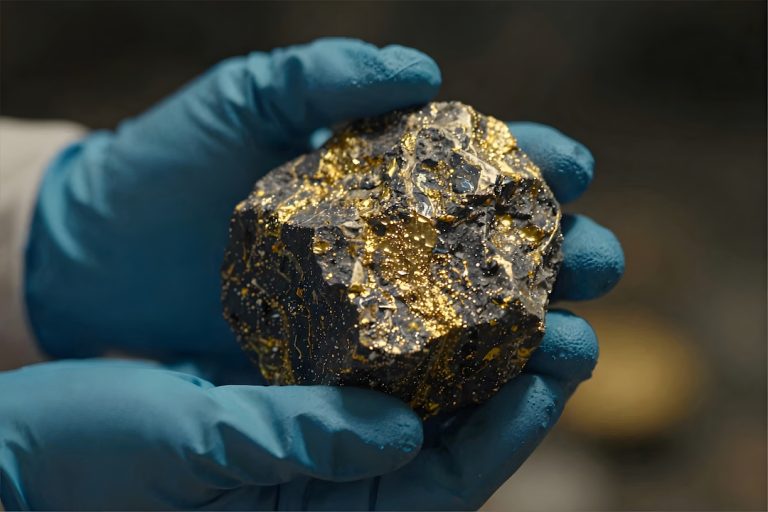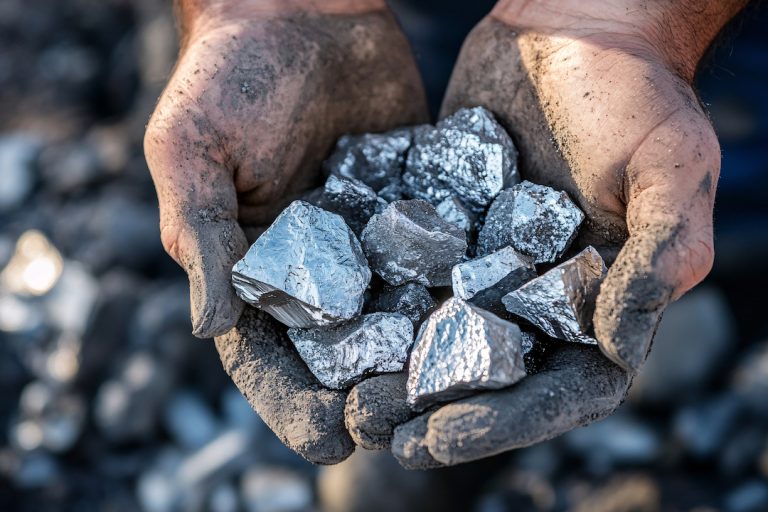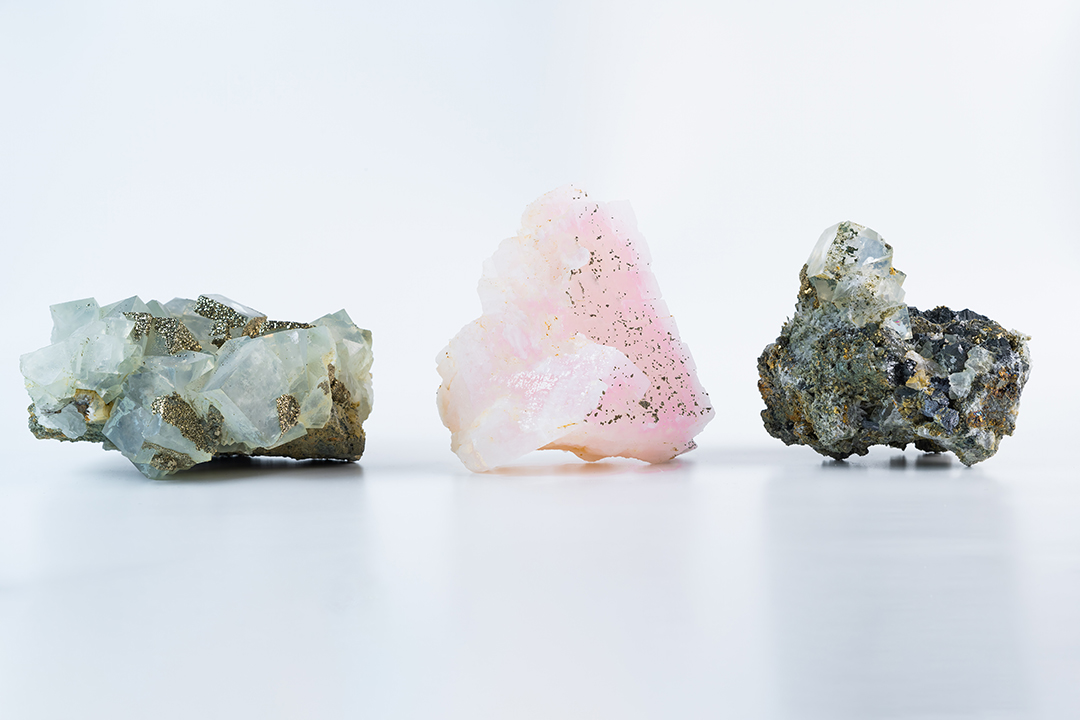
Rare earth elements rarely make headlines on their own merits — until a supply disruption threatens to shut down car factories, defense production lines, or electronics manufacturing. That is exactly what happened in April 2025, when China introduced export controls on seven rare earth elements that triggered factory shutdowns across the US, Europe, and Japan within weeks. Understanding what these elements are, why they matter, and why one country controls so much of the supply chain is essential context for any investor following the critical minerals story.
The Short Answer
Rare earth elements are a group of 17 chemically similar metallic elements that are essential to permanent magnets, electronics, and defense technology. Despite the name, they are not actually rare in the ground — what is rare is the capacity to economically separate and refine them, a capability overwhelmingly concentrated in China.
What Exactly Are They?
Rare earth elements are a family of 17 elements: the 15 lanthanides, plus scandium and yttrium, which are grouped with them because they share similar chemical properties and occur in the same ore deposits. They are typically split into two groups: light rare earth elements (including neodymium, praseodymium, lanthanum, and cerium) and heavy rare earth elements (including dysprosium, terbium, and yttrium).
The most commercially important application is permanent magnets — specifically neodymium-iron-boron (NdFeB) magnets, which are roughly ten times stronger than standard ferrite magnets. Dysprosium and terbium, the heavy rare earths, are added to these magnets as a heat shield, allowing them to retain their strength at high temperatures — critical for electric vehicle motors, wind turbine generators, and precision-guided weapons systems.
Where Are They Mined?
China mined approximately 270,000 of the world’s 390,000 metric tons of rare earths in 2025, according to the International Energy Agency and USGS data, giving it roughly 61-70% of global mined supply depending on the measure used. China also holds the largest reserves at 44 million metric tons.
Beyond China, meaningful production comes from the United States (the Mountain Pass mine in California, operated by MP Materials), Australia (Lynas Corporation’s Mount Weld mine, and the Browns Range dysprosium project in Western Australia), Myanmar, and increasingly Brazil, where Serra Verde’s Pela Ema deposit became the first operation outside Asia to produce all four critical magnet rare earths — neodymium, praseodymium, terbium, and dysprosium — at commercial scale starting in 2024.
Why China’s Real Dominance Is in Refining, Not Mining
The more important number for understanding rare earth supply risk is not mining share but refining share. China controls more than 90% of global rare earth refining capacity, and for the heaviest rare earths like dysprosium and terbium, that figure rises to 98-99%, according to multiple industry analyses including the International Energy Agency.
This matters because raw rare earth ore is of little commercial use until it is separated into individual purified elements — a complex, capital-intensive chemical process. Even when mining occurs outside China, as with Brazil’s Serra Verde, the ore has historically been shipped to China for processing because non-Chinese refining capacity remains extremely limited. This midstream chokepoint, not the mining stage, is the real source of China’s market power.
The April 2025 Export Controls and Their Aftermath
In April 2025, China introduced a licensing regime restricting exports of seven rare earth elements — including samarium, gadolinium, terbium, dysprosium, lutetium, scandium, and yttrium — along with related compounds and magnets, in response to US tariff actions. Chinese rare earth magnet exports plunged 74% year-over-year in May 2025, and multiple US and European auto manufacturers were forced to pause production lines within weeks.
Beijing eased some restrictions in July 2025 following diplomatic pushback, but introduced tougher new controls in early 2026 targeting dual-use items — products usable by both civilian and defense sectors. As of 2026, prices for rare earths sourced outside China have traded at premiums of four to six times domestic Chinese prices, according to commentary cited by Investing News Network, reflecting the cost of securing non-Chinese supply.
The Western Response
The scale of the disruption accelerated a wave of government and private investment in non-Chinese rare earth capacity. The US Department of Defense established a public-private partnership with MP Materials in July 2025, acquiring approximately $400 million in company stock and extending a $150 million loan for heavy rare earth separation expansion, along with a price floor commitment for neodymium-praseodymium. In February 2026, the White House announced Project Vault, a $12 billion initiative to establish a US Strategic Critical Minerals Reserve.
Other companies advancing non-Chinese supply include Energy Fuels (NYSE American: UUUU), which has produced pilot-scale dysprosium and terbium oxides in Utah; USA Rare Earth (NASDAQ: USAR), in the process of acquiring Brazil’s Serra Verde; Solvay, expanding separation capacity in France; and Lynas Corporation (ASX: LYC) in Australia. Despite this investment wave, analysts at Rare Earth Exchanges estimate that even with all announced projects, ex-China refining capacity would meet only about one-quarter of diversified-region demand by the early 2030s — illustrating how long the rebuilding process is likely to take.
Key Takeaways for Investors
- Rare earth elements are a group of 17 elements essential to permanent magnets used in EVs, wind turbines, electronics, and defense systems
- China mined about 270,000 of the world’s 390,000 metric tons in 2025, but its real dominance is in refining — 90%+ of overall capacity and 98-99% for heavy rare earths
- April 2025 Chinese export controls caused a 74% drop in magnet exports and forced Western auto production shutdowns within weeks
- Non-Chinese rare earths now trade at 4-6x premiums to domestic Chinese prices due to supply chain fragmentation
- The US government has taken direct equity stakes in rare earth companies (MP Materials) and committed $12 billion to a strategic reserve (Project Vault)
- Key non-Chinese producers to watch: MP Materials, Lynas Corporation, Energy Fuels, USA Rare Earth, Serra Verde (Brazil)
- Even with current investment, ex-China refining capacity is projected to meet only about 25% of diversified-region demand by the early 2030s
SOURCES
1. Rare Earth Exchanges — China’s Rare Earth Squeeze: https://rareearthexchanges.com/news/chinas-rare-earth-squeeze-has-evolved-from-a-mining-story-into-the-defining-industrial-challenge-of-our-time/
2. IEA — With New Export Controls on Critical Minerals, Supply Concentration Risks Become Reality: https://www.iea.org/commentaries/with-new-export-controls-on-critical-minerals-supply-concentration-risks-become-reality
3. Investing News Network — Rare Earths Reserves: Top 7 Countries: https://investingnews.com/daily/resource-investing/critical-metals-investing/rare-earth-investing/rare-earth-reserves-country/
4. S&P Global — Rare Earth Supply Bottlenecks Set to Persist in 2026: https://www.spglobal.com/energy/en/news-research/latest-news/metals/012726-rare-earth-supply-bottlenecks-set-to-persist-in-2026
5. GQG Partners — Critical Dependence on Rare-Earth Minerals: https://gqg.com/insights/critical-dependence-on-rare-earth-minerals/
6. Investing News Network — Rare Earths Forecast 2026: https://investingnews.com/rare-earths-forecast/
DISCLAIMER
This article is an educational explainer based on publicly available industry data, market research, and published analyst commentary. Information was current as of the publication date noted below. Commodity price data and forecasts are sourced as cited and reflect market conditions at the time of writing.
Mining Markets Report has not received compensation from any company, institution, or organization in connection with this article.
Institutional price forecasts and analyst commentary referenced in this article represent third-party opinions at the time of publication and are not guarantees of future commodity performance.
The information provided is for informational and educational purposes only and does not constitute financial, investment, or professional advice. Readers are encouraged to conduct their own due diligence and consult a qualified financial advisor before making any investment decision.
For full terms, see our Disclaimer.