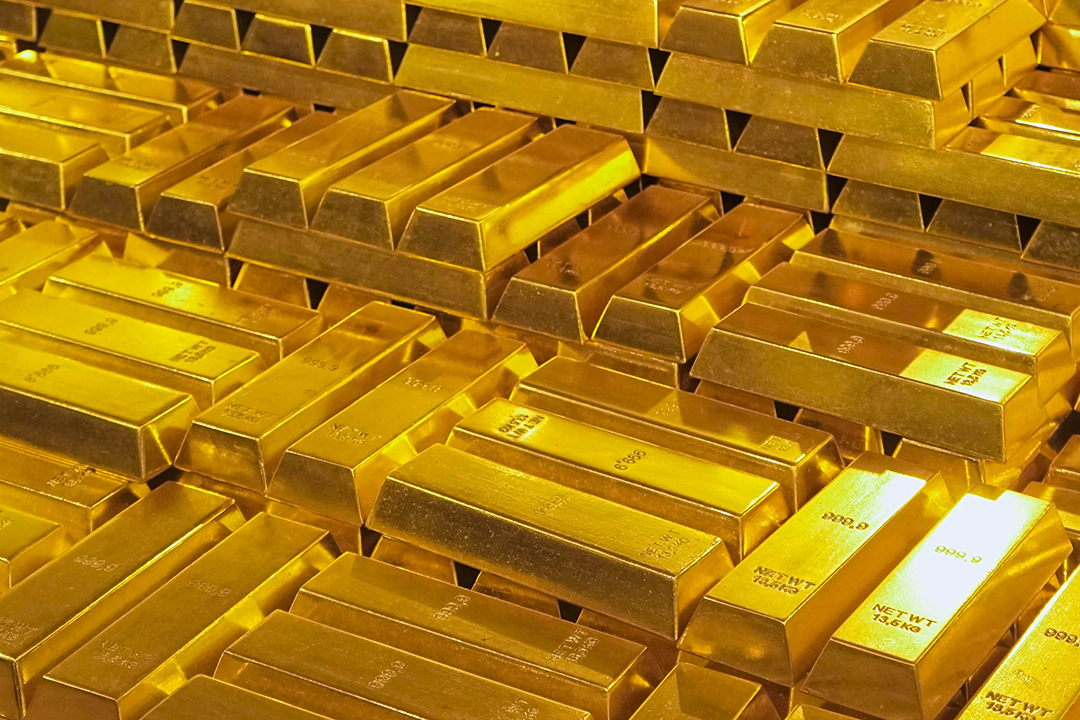
Gold opened 2026 trading above $5,000 per ounce for the first time in history, after a 2025 that delivered more than 50 all-time highs and a return of over 60%, according to the World Gold Council. For anyone following mining stocks, understanding what actually moves the gold price is essential — because gold producers, explorers, and royalty companies all live and die by it. This guide breaks down the real drivers in plain English.
The Short Answer
Gold prices are driven primarily by real interest rates (interest rates adjusted for inflation), central bank buying, the strength of the US dollar, and geopolitical risk. When real yields fall, central banks buy aggressively, or fear rises, gold tends to climb. These forces can reinforce each other or pull in opposite directions.
Real Interest Rates — The Core Relationship
The single most important concept in understanding gold is the real interest rate — the nominal interest rate minus expected inflation. When real yields are positive and rising, holding cash or government bonds becomes more attractive relative to gold, which pays no interest or dividend. When real yields are negative or falling, the opportunity cost of holding gold declines, and gold’s appeal increases.
For example, a 10-year Treasury yield at 4% with inflation expectations at 2% implies a positive real yield of 2% — typically a headwind for gold. Research from PIMCO found that, looking back over data from 2004 to 2025, a 100-basis-point increase in 10-year real yields has historically led to an 18% decline in the inflation-adjusted gold price. That said, this relationship has weakened somewhat in recent years as other forces — particularly central bank buying — have taken on a larger role.
Central Bank Buying — The Structural Floor
Central banks have become the most consistent and price-insensitive buyers in the gold market. From 2022 through 2025, global central banks purchased more than 1,000 tonnes of gold annually in three separate years — nearly double the 2010-2021 average of 473 tonnes per year, according to World Gold Council data. The National Bank of Poland, the People’s Bank of China, the Reserve Bank of India, and Turkey’s central bank have been among the largest buyers.
This demand matters differently than investor demand. Central banks are not trading for short-term profit — they are reallocating national reserves for strategic reasons, including a broader trend toward de-dollarization (reducing reliance on the US dollar as a reserve currency) following events like the freezing of Russian central bank assets in 2022. A 2025 World Gold Council survey found 95% of central banks expected their gold reserves to increase over the following 12 months, with none anticipating a reduction. Because this gold is removed from the market for years once purchased, it acts as a structural floor under prices even when other buyers step back.
The US Dollar
Gold is priced globally in US dollars, so movements in the dollar’s value affect how expensive gold appears to international buyers. A weaker dollar generally makes gold cheaper for non-US buyers, supporting demand and prices. A stronger dollar has the opposite effect.
However, this relationship is not absolute. In 2008, 2020, and early 2026, the dollar and gold rose together, as investors fled into both assets simultaneously during periods of acute market stress. The more reliable long-run relationship is between gold and the dollar’s purchasing power rather than its exchange rate against other currencies — a dollar that strengthens against the euro while losing ground against real goods is still a weakening currency in the sense that matters for gold.
Inflation and Inflation Expectations
Gold has functioned as a hedge against the erosion of purchasing power for centuries. When inflation runs persistently above a central bank’s target — the US Federal Reserve targets 2% — and that inflation is not fully offset by rising bond yields, gold tends to benefit. As of early 2026, US core CPI remained above 3%, keeping inflation concerns relevant to the gold price outlook even as the Fed weighed further rate decisions.
Geopolitical Risk and Safe-Haven Demand
Gold is unique among major asset classes in that it carries no counterparty risk — meaning its value does not depend on any government, company, or institution honoring an obligation. It cannot be frozen, defaulted on, or devalued by a third party. This makes gold a default destination during periods of war, sanctions risk, sovereign debt stress, or banking instability. Episodes of conflict and trade tension during 2025 and into 2026 have repeatedly driven short-term spikes in gold demand tied to this dynamic.
Investment Demand: ETFs, Bars, and Coins
Beyond central banks, investor demand through gold-backed Exchange Traded Funds (ETFs), physical bars, and coins represents a more price-sensitive and faster-moving layer of demand. ETF flows can reverse quickly — Q1 2026 saw a sharp decline in Western ETF inflows even as central bank and Asian buying remained robust, illustrating how different categories of demand can move independently.
Why Forecasts Vary So Widely
Major investment banks publish gold price targets that can differ by thousands of dollars per ounce, reflecting different assumptions about Fed policy, the dollar, and central bank behavior. As of mid-2026, forecasts for year-end 2026 ranged from Goldman Sachs at $4,900 (revised down from $5,400 after the bank removed expected 2026 rate cuts from its model) to JP Morgan around $6,000, with Bank of America’s 12-month target at $6,000 and UBS citing a $7,200 upside scenario if geopolitical risks escalate materially. These figures illustrate forecasts, not guarantees — gold prices are inherently volatile.
Key Takeaways for Investors
- Real interest rates — nominal rates minus inflation expectations — are the core driver; falling or negative real yields support gold
- Central banks bought 1,000+ tonnes annually in three of the last four years, providing a structural, price-insensitive floor under demand
- The US dollar typically has an inverse relationship with gold, though this can break down during acute market stress
- Persistent inflation above central bank targets supports gold’s role as a purchasing-power hedge
- Gold’s lack of counterparty risk makes it a default safe haven during geopolitical and financial stress
- Investment demand through ETFs and physical bars/coins is more price-sensitive and volatile than central bank buying
- Analyst price forecasts vary widely and depend heavily on assumptions about Fed policy — treat all forecasts as scenarios, not certainties
SOURCES
1. World Gold Council — Gold Outlook 2026: https://www.gold.org/goldhub/research/gold-outlook-2026
2. PIMCO — Understanding Gold Prices: https://www.pimco.com/us/en/resources/education/understanding-gold-prices
3. GoldSilver.com — What Moves Gold Prices? 6 Key Factors Explained: https://goldsilver.com/industry-news/article/what-moves-gold-prices-6-key-gold-price-factors-explained/
4. CME Group — Precious Metals Outlook 2026: https://www.cmegroup.com/articles/2026/precious-metals-outlook-2026-market-dynamics-following-a-record-breaking-year.html
5. EBC Financial Group — Gold Price Drivers: Rates, Dollar, Central Banks: https://www.ebc.com/forex/gold-price-drivers-rates-dollar-central-banks
6. J.P. Morgan Global Research — Gold Price Predictions 2026 and 2027: https://www.jpmorgan.com/insights/global-research/commodities/gold-prices
DISCLAIMER
This article is an educational explainer based on publicly available industry data, market research, and published analyst commentary. Information was current as of the publication date noted below. Commodity price data and forecasts are sourced as cited and reflect market conditions at the time of writing.
Mining Markets Report has not received compensation from any company, institution, or organization in connection with this article.
Institutional price forecasts and analyst commentary referenced in this article represent third-party opinions at the time of publication and are not guarantees of future commodity performance.
The information provided is for informational and educational purposes only and does not constitute financial, investment, or professional advice. Readers are encouraged to conduct their own due diligence and consult a qualified financial advisor before making any investment decision.
For full terms, see our Disclaimer.